

Allergy Friendly Baking Tips: Vegan & Gluten Free Guide
Editorial TeamTable of Contents
- Why Allergy Friendly Baking Matters for Inclusive Celebrations
- Common Allergens in Baking and Their Alternatives
- Choosing Vegan Gluten Free Cake Decorations You Can Trust
- Preventing Cross-Contamination in Home Baking
- Step-by-Step: Adapting Your Favourite Recipes
- Labelling and Legal Requirements for Allergen-Free Bakes
- Conclusion
- Frequently Asked Questions
Last Updated: September 11, 2026
Why Allergy Friendly Baking Matters for Inclusive Celebrations
Allergy friendly baking is the practice of preparing cakes, biscuits and desserts so that people with food allergies or intolerances can share them safely. At Simply Toppers, we've supplied handmade edible decorations since 2013, and the questions we hear most often come from parents and home bakers who want one cake that everyone at the table can enjoy.
That goal is harder than it sounds. A birthday cake is rarely just a cake. It's the centrepiece of the party, and if one child can't eat it, they notice. The good news is that adapting your favourite recipes is entirely doable once you understand which ingredients do what.
Below, we'll walk through the common allergens in baking, the substitutes that genuinely work, how to avoid cross-contamination at home, and how to adapt any recipe step by step.
Common Allergens in Baking and Their Alternatives
The allergens that cause the most trouble in baking are eggs, dairy, wheat, nuts and soya. Each one has workable replacements, but they behave differently, so the swap you choose depends on what the ingredient was doing in the first place.
Egg Substitutes That Actually Work
Eggs bind, add moisture and help bakes rise. No single substitute does all three perfectly, so match the swap to the recipe.
- Flaxseed or chia eggs: 1 tablespoon of ground seed plus 3 tablespoons of water per egg. Best for muffins, flapjacks and dense sponges.
- Mashed banana: A quarter of a mashed banana per egg. Adds flavour, so it suits banana bread more than a plain Victoria sponge.
- Baking powder and oil: 1 teaspoon of baking powder, 1 tablespoon of oil and 2 tablespoons of water per egg. Works well in lighter sponges.
- Commercial egg replacers: Follow the packet ratio. Reliable for consistent results.
A common mistake is swapping eggs one-for-one without adjusting liquid. If your substitute is wetter than an egg, reduce the milk or water elsewhere in the recipe.
Dairy-Free Milks and Fats for Cakes
Plant milks swap in easily, but choose unsweetened versions for baking so you control the sugar. Soya, oat and almond milk all work, though almond is obviously unsuitable if nuts are the allergen you're avoiding. For fat, use a dairy-free block margarine rather than a spread, because spreads contain more water and give a greasier crumb.
NHS advice on food allergies and intolerances is a useful starting point if you're new to reading labels, since it explains how allergens must be declared on packaged food.
Choosing Vegan Gluten Free Cake Decorations You Can Trust
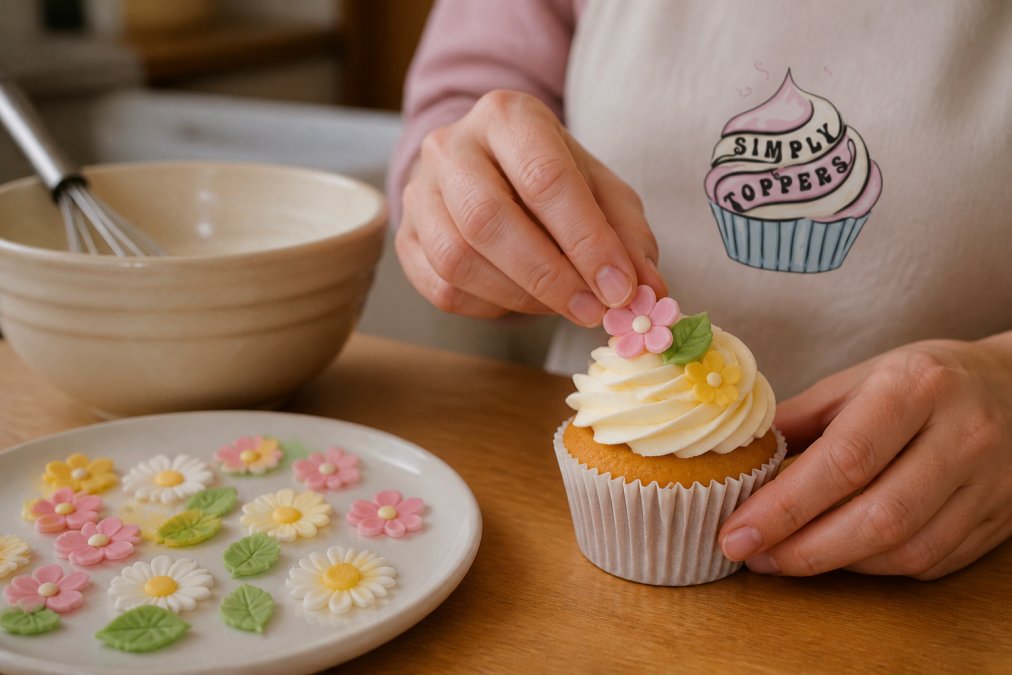
The cake itself is only half the job. Vegan gluten free cake decorations are where many well-meaning bakes come undone, because standard sprinkles, glitter and shop-bought toppers often contain wheat starch, egg white or dairy.
Check three things before you buy:
- The ingredient list, not just the "free from" aisle. Wheat starch can appear in icing sugar blends and edible glitter.
- Whether the maker states their allergens clearly. A supplier who can't tell you exactly what's in a product isn't one to trust with a coeliac guest.
- Whether the decoration is genuinely edible. Some glitter and lustre dusts are labelled non-toxic but not food-safe.
This is the part most guides skip. Handmade sugar paste toppers are usually the safer choice because the maker knows every ingredient that went in.
Simply Toppers makes all its decorations by hand from sugar paste, and every design is vegan, vegetarian, dairy-free and gluten-free. The Food Standards Agency guidance on allergen labelling sets out what "free-from" claims are allowed to mean, which is worth reading before you rely on any label.
If you're planning a themed celebration, the Glitter Sea Life Cake Decorations suit ocean-themed birthdays, while the 2 Mermaid Tails Cake Toppers work well for mermaid parties. Both arrive ready to place, so there's no last-minute piping.


Preventing Cross-Contamination in Home Baking
Preventing cross-contamination in home baking comes down to separating equipment, surfaces and timing. If your kitchen also handles wheat, dairy or nuts, the risk isn't the recipe, it's the crumbs on the worktop.
Setting Up a Safe Baking Space
Work in this order and the job gets much easier:
- Clean the worktop, then clean it again with a fresh cloth
- Use separate bowls, spoons and measuring cups for the allergen-free bake
- Check that your baking tray, whisk and sieve are genuinely clean, not just wiped
- Wash your hands and change your apron before you start
- Bake the allergen-free item first, before anything containing allergens
- Cover finished bakes while other food is being prepared nearby
Wooden spoons, non-stick trays with scratched coatings and sieves are the hardest items to clean properly. If you bake allergen-free regularly, keep a separate set. A shared sieve is one of the most common sources of hidden contamination.
Step-by-Step: Adapting Your Favourite Recipes
Adapting a recipe is simpler than starting from scratch, and it keeps the flavours your family already likes. Work through these steps in order.
- List every allergen in the original recipe. Include the obvious ones and the sneaky ones, such as egg wash on a pastry or butter in the frosting.
- Decide what each ingredient is doing. Binding, rising, adding fat or adding flavour. This tells you which substitute to use.
- Swap one ingredient at a time. Changing three things at once makes it impossible to tell what went wrong if the bake fails.
- Adjust the liquid. Most egg and dairy substitutes change the moisture balance, so add flour or reduce liquid as needed.
- Bake a small test batch first. A couple of muffins cost far less than a ruined celebration cake.
- Note what you changed. Write it on the recipe card so the next bake is easier.
| Recipe Element | Common Allergen | Substitute | Watch Out For |
|---|---|---|---|
| Binding | Egg | Flaxseed or chia egg | Adds a slight nutty taste |
| Fat | Butter | Dairy-free block margarine | Spreads are too watery |
| Liquid | Cow's milk | Unsweetened oat or soya milk | Check for added sugar |
| Raising | Self-raising flour | Gluten-free blend plus xanthan gum | Texture turns crumbly |
| Decoration | Standard sprinkles | Handmade sugar paste toppers | Check for wheat starch |
Labelling and Legal Requirements for Allergen-Free Bakes
If you sell or share your bakes beyond family and friends, labelling stops being optional. Under Food Standards Agency rules on allergen information, food businesses must provide accurate allergen information for the 14 named allergens, whether the food is packaged or sold loose.
For home bakers selling at markets or taking orders, that means keeping a written record of every ingredient in every bake, including decorations. If someone asks whether a cake contains milk, "I think so" isn't an answer that protects anyone.
For gifts and party cakes, a simple label listing the allergens present, and a note that the bake was prepared in a kitchen that handles other allergens, is honest and genuinely useful. It takes two minutes and it saves a guest from an unnecessary risk.
Conclusion
Adapting your baking for allergies takes a little planning, but the payoff is a table where nobody has to sit out the cake. The trickiest part is usually the decoration, since that's where hidden wheat, egg and dairy tend to hide.
Simply Toppers has been making handmade edible decorations since 2013, and every design is vegan, vegetarian, dairy-free and gluten-free, including our Free From Food Awards-winning ranges. You can order ready-made toppers such as our 30 Coloured Glittered Edible Sea Shell Cupcake Decorations, or ask us to custom-make a design for your celebration. Get started with Simply Toppers and finish your next bake with decorations everyone can enjoy.

Frequently Asked Questions
How do you substitute eggs in allergy-friendly baking?
For each egg, try 1 tablespoon of ground flaxseed mixed with 3 tablespoons of water and left for 10 minutes, or use 60g of mashed banana or 50g of unsweetened apple puree. These work well in muffins, brownies and traybakes. For lighter sponges, a commercial egg replacer or 1 teaspoon of baking powder with 1 tablespoon of vinegar per egg can help. Always test a small batch first, as texture varies by recipe.
What are the best gluten-free flour blends for beginners?
Start with a shop-bought gluten-free plain flour blend that already contains xanthan gum, as it simplifies binding. For self-raising versions, check the label for added raising agents. If you prefer to mix your own, combine 40% rice flour, 30% potato starch and 30% tapioca starch, then add 1 teaspoon of xanthan gum per 150g. This blend works well for cakes, biscuits and pancakes, though you may need extra liquid.
How can I prevent cross-contamination in my kitchen?
Designate a separate area for allergy-friendly baking, and clean all surfaces, utensils and tins with hot soapy water before you start. Use separate spoons for each ingredient, and never dip a used spoon back into a shared jar. If you share a kitchen with gluten or nuts, store your safe ingredients in sealed containers on a top shelf. Consider keeping a dedicated set of baking tools, and always wash your hands thoroughly before handling safe ingredients.
Which dairy-free milk alternatives work best for cakes?
Oat milk and soya milk are the closest to dairy in fat and protein, so they give cakes a good rise and moist crumb. Almond milk works well but adds a nutty flavour, so avoid it if nuts are a concern. Rice milk is lighter and may make cakes slightly denser. Coconut milk (from a carton, not a tin) adds a subtle sweetness. For best results, use unsweetened varieties and match the volume exactly to the recipe.
Are there specific labelling requirements for allergen-free bakes in the UK?
If you sell or share bakes at a community event, you must comply with UK food allergen labelling rules. The 14 major allergens, including celery, cereals containing gluten, eggs, milk, nuts, peanuts, soya and sesame, must be declared. For pre-packed foods, emphasise the allergen in bold in the ingredients list. For loose foods, provide a written allergen matrix or a clear verbal warning. Always keep records of your ingredients and cleaning routines.
How do I ensure my cake decorations are safe for those with allergies?
Choose decorations that are explicitly labelled vegan, gluten-free and free from the allergens you are avoiding. Handmade sugar paste toppers from a specialist like Simply Toppers are made without dairy or gluten and are suitable for vegans, reducing risk. Check the packaging for may-contain warnings, and store decorations separately from loose flour or nuts. If you are unsure, contact the supplier for their allergen statement before using them.