

Do Edible Toppers Melt Fast? What You Need to Know
Editorial TeamTable of Contents
- Do Edible Toppers Melt? The Short Answer
- What Makes Edible Toppers Melt or Break Down
- How Buttercream and Royal Icing Affect Your Toppers
- How to Store Fondant Toppers Before and After Application
- Preventing Condensation on Cake Toppers
- Edible Topper Shelf Life: How Long Do They Last?
- Cake Transport and Emergency Recovery Tips
- Conclusion
Last Updated: August 19, 2026
Do Edible Toppers Melt? The Short Answer
Edible toppers melt or soften when exposed to heat, humidity, and moisture, but the speed depends heavily on the material and storage. The honest answer: yes, they break down under the wrong conditions, but most problems are entirely preventable.
Edible toppers are sugar-based decorations made from icing sheets, wafer paper, or sugar paste. Each material has different sensitivity to temperature and moisture. A wafer paper topper in a warm kitchen behaves very differently from a sugar paste decoration in a refrigerator.
Below, we'll walk through exactly what causes edible toppers to break down, which materials are most vulnerable, and the practical steps that keep your decorations looking perfect from application to serving.
What Makes Edible Toppers Melt or Break Down
Several factors cause edible toppers to soften or lose structural integrity. Heat is obvious, but moisture is often the bigger problem in practice.
Heat and Ambient Temperature
High ambient temperature is the most direct cause of breakdown. Sugar paste and icing sheets soften noticeably as temperatures climb. In a warm kitchen during summer or near an oven, this accelerates quickly. Even a short period at elevated temperatures can cause colours to bleed and edges to lose definition.
Most sugar-based decorations remain stable at normal room temperature (around 18-20°C), but begin to soften meaningfully above 25°C. A warm car, conservatory in July, or cake left near a window in direct sunlight can push temperatures well beyond that.
Humidity and Surface Moisture
Humidity is arguably a bigger threat than heat alone. Sugar is hygroscopic, it absorbs moisture from the surrounding air. In humid environments, icing sheets and sugar paste toppers draw in moisture, causing them to soften, wrinkle, and eventually dissolve. This is why edible toppers degrade faster in summer or in kitchens with steam.
Surface moisture is a related problem. When a topper is placed on a freshly iced cake with moisture on the surface, that moisture migrates upward into the decoration. This is one of the most common causes of premature breakdown.
According to the UK Met Office guidance on humidity and temperature, summer months regularly exceed 70% relative humidity indoors in poorly ventilated spaces, a meaningful risk for sugar decorations left uncovered.
Icing Sheet vs Wafer Paper vs Sugar Paste: How Each Reacts
Not all edible toppers melt at the same rate.
| Material | Moisture Sensitivity | Heat Sensitivity | Best Conditions |
|---|---|---|---|
| Icing sheets | High, dissolves quickly in moisture | Moderate | Cool, dry; apply just before serving |
| Wafer paper | Very high, wrinkles and tears when wet | Low | Dry environments only |
| Sugar paste | Moderate, softens gradually | Moderate-high | Room temp, low humidity |
Icing sheets are the most moisture-sensitive and can dissolve within minutes if placed on a wet surface. Wafer paper wrinkles and becomes translucent almost immediately when wet. Sugar paste toppers are more forgiving: they soften slowly and maintain their shape longer, making them a practical choice for parties where the cake will be out for a few hours.
How Buttercream and Royal Icing Affect Your Toppers
The icing type on your cake has a direct chemical interaction with your topper, a detail most home bakers overlook.
Buttercream contains high moisture content. When an icing sheet or wafer paper topper sits on buttercream, moisture migrates upward into the decoration almost immediately, resulting in a softened, wrinkled, or partially dissolved topper within an hour or two. Sugar paste toppers handle buttercream better, but even they soften over time if the surface is particularly wet.
The practical fix: chill the buttercream-covered cake until the surface is firm before applying any topper. A cold, firm surface transfers far less moisture than freshly applied, room-temperature buttercream. Give the cake at least 30 minutes in the refrigerator before placing the decoration.
Royal icing dries to a hard, dry surface, which is ideal for icing sheets and wafer paper. However, if the royal icing is still slightly tacky, it can bond aggressively with a topper and cause tearing when you adjust its position. Always wait until royal icing is completely dry before applying a topper.
How to Store Fondant Toppers Before and After Application
Knowing how to store fondant toppers correctly is the single most important thing you can do to protect your investment.
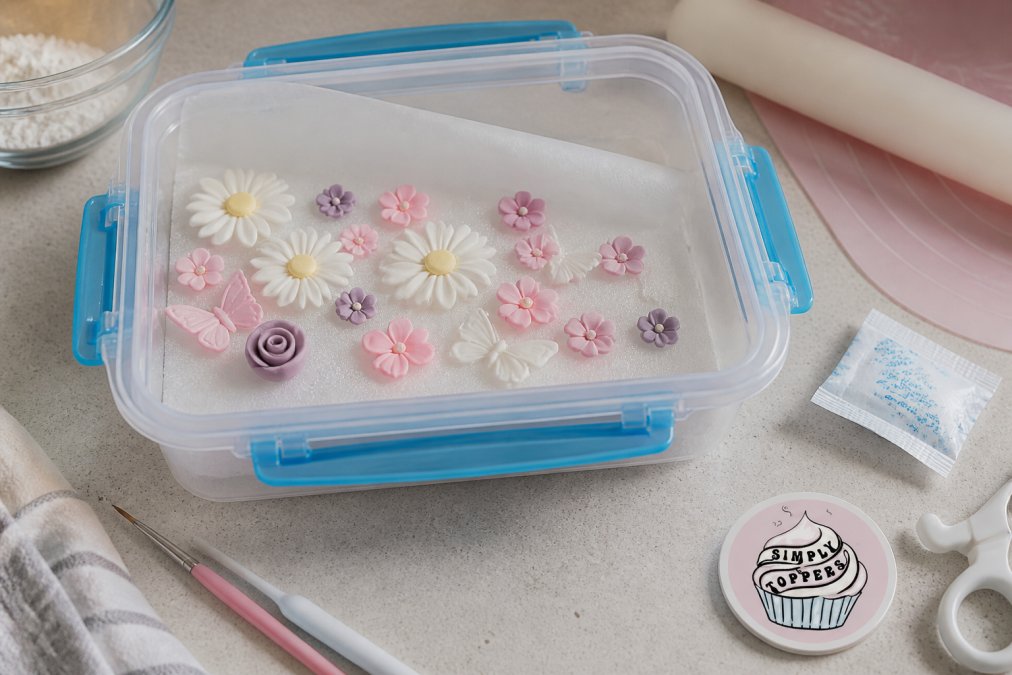
Store sugar paste and fondant toppers flat, in a cool, dry location, away from direct sunlight and heat sources. The goal is to minimise exposure to both humidity and temperature fluctuation before application.
Airtight Containers and Silica Gel
An airtight container is the most effective storage solution. It creates a sealed environment that limits the topper's exposure to ambient humidity. For added protection, particularly in summer or humid kitchens, place a food-safe silica gel packet inside the container alongside the topper.
Silica gel absorbs excess moisture from the air inside the container, keeping the internal environment dry. This is especially useful for icing sheets and wafer paper. Make sure the silica gel packet is food-safe and does not come into direct contact with the decoration.
Practical storage points:
- Store toppers flat to prevent warping or cracking
- Keep the container away from the fridge unless the topper is already on the cake
- Avoid stacking toppers directly on top of each other without greaseproof paper between them
- Check the container seal regularly
Should You Refrigerate Edible Toppers?
Generally, no, not before application. Refrigerating an edible topper before it's on the cake exposes it to condensation risk that occurs when a cold item is brought back to room temperature. That condensation can dissolve or wrinkle the decoration before it reaches the cake.
Once the topper is on the cake, refrigeration is possible. Bring the cake back to room temperature slowly and in a covered container to minimise condensation forming on the decoration's surface. As noted by the Food Standards Agency guidance on food storage, the transition between temperatures is where most decoration damage occurs.
Preventing Condensation on Cake Toppers
Condensation is the silent enemy of edible toppers. It forms when a cold surface meets warm, humid air, exactly what happens when you take a chilled cake out of the refrigerator into a warm room.
Moisture that forms on the cake's surface can migrate directly into any topper sitting on it, causing icing sheets to dissolve, wafer paper to wrinkle, and sugar paste to soften. Preventing condensation is about managing the temperature transition.
Here's a reliable approach:
- Chill the cake before applying the topper. Apply the topper just before the cake leaves the fridge for the final time.
- Bring the cake to room temperature gradually. Let it sit in a cool hallway or utility room for 20-30 minutes first.
- Keep the cake covered during the transition. A cake box or loose covering reduces warm, humid air reaching the cold surface.
- Avoid placing a decorated cake near steam sources. Kettles, hobs, and dishwashers all release steam that accelerates condensation.
- Apply icing sheets and wafer paper toppers at the last possible moment. The shorter the time between application and serving, the less condensation risk.
Edible Topper Shelf Life: How Long Do They Last?
Edible topper shelf life varies by material. Most sugar paste and fondant toppers remain usable for several months when stored correctly. Icing sheets and wafer paper have shorter shelf life and are more sensitive to storage conditions.
A general guide:
- Sugar paste / fondant toppers: Several months when kept in airtight, cool, dry conditions. Always check the use-by date on packaging.
- Icing sheets: Shorter shelf life; more vulnerable to humidity during storage. Use sooner rather than later once opened.
- Wafer paper: Similar to icing sheets; moisture exposure shortens usable life quickly once opened.
The most common mistake is storing toppers in the wrong environment, a warm kitchen cupboard near the hob or a damp drawer. Even a topper well within its use-by date will deteriorate faster in poor storage. Conversely, a topper stored correctly in an an airtight container with silica gel will often remain in excellent condition right up to its stated shelf life.
For guidance on food labelling and use-by dates, the UK Food Standards Agency food date labelling guidance provides clear information on what these dates mean in practice.
Cake Transport and Emergency Recovery Tips
Transporting a decorated cake is where the best preparation can still go wrong. Even a perfectly stored and applied topper can suffer during a journey if conditions aren't right.
Transporting a Cake Safely
A few simple steps make a significant difference:
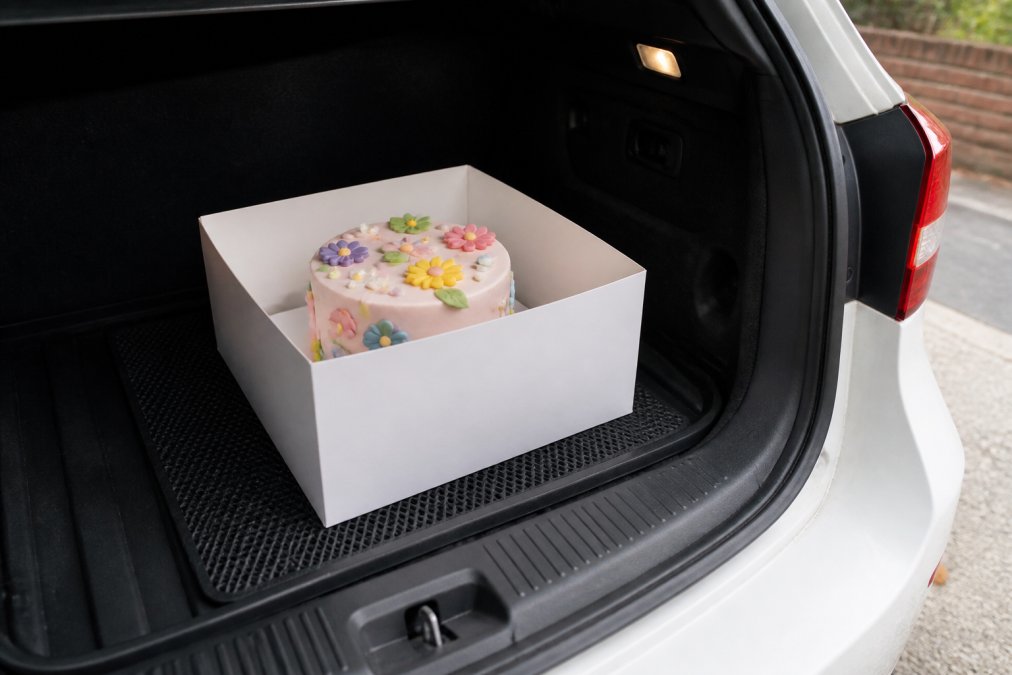
- Use a sturdy cake box that fits the cake snugly. Too much movement causes the cake to shift and the topper to crack or slide.
- Keep the car cool. Run the air conditioning before loading the cake. A warm car interior softens sugar paste toppers quickly.
- Place the box on a flat, non-slip surface. The footwell of the passenger seat or a flat boot floor with a non-slip mat works well.
- Avoid long journeys during peak heat. In summer, plan the journey for the cooler part of the day where possible.
- Don't refrigerate the cake immediately before transport. Condensation that forms when a cold cake meets a warm car interior is a real risk for icing sheets.
What to Do If a Topper Has Already Softened
For a softened sugar paste topper: Place the cake in a cool, dry room and allow the topper to firm up slightly. Avoid touching it while soft; fingerprints will show. If softening is severe, a gentle blast of cool air from a fan can help.
For a wrinkled icing sheet: Once an icing sheet has absorbed moisture and wrinkled, it's very difficult to reverse. Remove it carefully, allow the cake surface to dry slightly, and apply a fresh topper if available.
For colour bleeding: Ink smudging is caused by moisture. If caught early, moving the cake to a cooler, drier environment can slow the spread. Once bleeding has occurred across a large area, the topper will need replacing.
Always order a spare topper when the decoration is important. Having a backup eliminates the stress of an emergency with no solution.
A Summary: Edible Topper Care at a Glance
| Situation | Risk | What to Do |
|---|---|---|
| Buttercream surface | High moisture transfer | Chill cake before applying topper |
| Royal icing surface | Bonding if not fully dry | Wait until completely set |
| Warm room (above 25°C) | Softening and colour bleed | Move to cool area; apply topper late |
| High humidity | Dissolving and wrinkling | Use airtight container with silica gel |
| Refrigerator to room temp | Condensation damage | Transition gradually; keep covered |
| Transport in warm car | Rapid softening | Cool the car; use a snug cake box |
| Already softened topper | Permanent damage if touched | Cool air; do not handle; use spare |
Last checked against current food safety guidance from the Food Standards Agency.
Managing whether edible toppers melt comes down to understanding the material you're working with and controlling the environment around it. Sugar paste toppers are the most resilient choice for parties where the cake will be out for a few hours. Simply Toppers' handmade sugar paste decorations, made with over a decade of craft behind them and free from dairy and gluten, are designed with exactly these real-world conditions in mind. If you're planning a celebration and want decorations that hold up beautifully, explore the range and use the Quick Order Form to get started.
Frequently Asked Questions
Do edible toppers melt in the fridge?
Sugar paste and fondant toppers can soften and become sticky when placed in a fridge, because refrigerators create condensation as the topper warms back to room temperature. Icing sheets are especially moisture-sensitive and can dissolve quickly. If you need to chill a finished cake, apply the topper as late as possible and allow the cake to come to room temperature slowly, ideally inside the box, to reduce the risk of condensation damage.
How long does an edible topper shelf life last?
Stored correctly in a cool, dry place inside an airtight container away from direct light, most sugar paste and fondant toppers remain in good condition for several months before being applied to a cake. Icing sheets and wafer paper edible images tend to have a shorter usable window once opened. Always check the best-before date on your specific topper and avoid humid storage areas, which accelerate deterioration regardless of the printed date.
How far in advance can you make or order cake toppers?
Handmade sugar paste toppers can be made or ordered several weeks ahead of an event, provided they are stored in an airtight container in a cool, dry spot away from sunlight and humidity. Many bakers apply toppers one to two days before the party so the decoration has time to settle on the cake surface without the risk of last-minute damage. Ordering early also gives you peace of mind if you need a custom design, as production and delivery take time.
What is the fastest way to dry fondant toppers?
The quickest way to dry fondant toppers is to place them on a non-stick surface in a warm, dry room with good air circulation, away from direct sunlight. Some bakers use a low-heat food dehydrator set to a very gentle temperature, though this requires care to avoid cracking. Avoid using an oven, even on its lowest setting, as uneven heat can warp or discolour the topper. Thin toppers typically dry within a few hours; thicker, three-dimensional pieces may need 24 to 48 hours.
This article was written using GrandRanker