

How to Identify Hidden Allergens in Decorations
Editorial TeamTable of Contents
- Introduction: Why Hidden Allergens in Decorations Matter
- Reading Cake Decoration Ingredient Labels Like a Pro
- Cross-Contamination in Cake Decorating: What You Need to Know
- Questions to Ask Cake Decoration Suppliers Before You Buy
- Non-Edible Decorations: Can They Transfer Allergens?
- Your Allergy-Safe Cake Decorating Checklist
- Conclusion: Safe Celebrations Start with Knowledge
- Frequently Asked Questions
Last Updated: 21 October 2026
Introduction: Why Hidden Allergens in Decorations Matter
When you buy a cake topper, the label is your only real protection. That's the uncomfortable truth about hidden allergens in decorations: they rarely announce themselves, and a pretty design tells you nothing about what's inside the box. At Simply Toppers, we've made allergen-friendly sugar paste decorations since 2013, so we know how easily a harmless-looking flourish can carry dairy, gluten or nut traces.
Below, we'll show you exactly how to read labels, question suppliers and build a safe decorating routine. The good news? A few careful habits catch most problems before they reach the cake.
Reading Cake Decoration Ingredient Labels Like a Pro
The label is the first place hidden allergens hide. Read it before you read the design description, and read the full ingredient list rather than the front-of-pack claims.
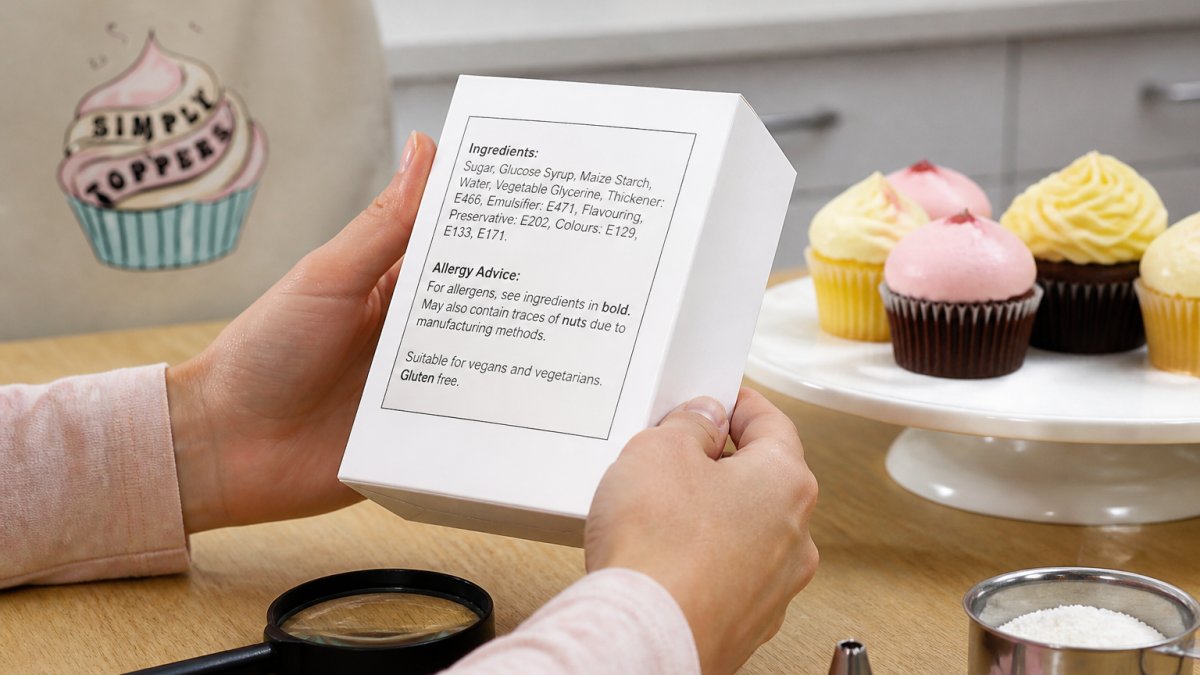
Start with these habits:
- Check the full ingredients, not just the "free from" badges
- Look for the bold or underlined allergen terms
- Scan the "may contain" line separately
- Note the manufacturer, not just the retailer
The 14 Major Allergens to Look For
UK food law recognises 14 major allergens that must be declared on food labels. These are:
- Celery
- Cereals containing gluten
- Crustaceans
- Eggs
- Fish
- Lupin
- Milk
- Molluscs
- Mustard
- Nuts
- Peanuts
- Sesame
- Soya
- Sulphur dioxide and sulphites
For cake decorations, the ones that turn up most often are milk, gluten, egg, soya, nuts and sesame. Any decoration that lists one of these must say so clearly. Official guidance from the Food Standards Agency on allergen labelling is worth reading if you want the full legal picture.
Decoding 'May Contain' and 'Made in a Factory' Warnings
"May contain" is not a legal requirement. It's a voluntary warning that a maker uses when cross-contamination is possible but not certain.
Treat it seriously if the allergy is severe. A "made in a factory that also handles nuts" note means the risk is real, even if the product itself is nut-free. If you're decorating for someone with a serious allergy, avoid these products. There are plenty of alternatives made in dedicated spaces.
Cross-Contamination in Cake Decorating: What You Need to Know
Cross-contamination in cake decorating happens in two places: the supplier's kitchen and your own. Most guides only cover the first, but the second is where home bakers get caught out.
At the supplier end, ask whether decorations are made on shared equipment. At home, follow these rules:
- Wash hands and tools before handling decorations
- Use a separate board for allergen-free work
- Keep decorations sealed until the moment you use them
- Never use the same knife or cutter across different batches
Questions to Ask Cake Decoration Suppliers Before You Buy
A good supplier will answer allergen questions without hesitation. If they dodge or give vague answers, that tells you something.
Ask these questions before you order:
- Which of the 14 allergens are in the product?
- Are the decorations made on shared equipment?
- Can you confirm the full ingredient list in writing?
- Are the decorations suitable for a vegan or gluten-free diet?
- How are they packaged and stored before delivery?
At Simply Toppers, our sugar paste toppers are 100% vegan and free from dairy and gluten, and we're happy to talk through ingredients before you order. Not every supplier is that open, so ask anyway. The reply is often more revealing than the product page.
Non-Edible Decorations: Can They Transfer Allergens?
Yes, they can. Non-edible decorations like plastic picks, ribbons and printed paper toppers can carry allergens through contact, especially if they've been handled during packing.
The risk is smaller than with edible decorations, but it isn't zero. A paper topper pressed into buttercream can transfer traces onto the icing. For someone with a serious allergy, that matters.
Simple precautions:
- Keep non-edible decorations out of direct contact with the cake surface where possible
- Use a small barrier, such as a paper disc, under the decoration
- Wash your hands after handling packaging
- Store non-edible items separately from edible ones
If you're decorating for a guest with a serious allergy, choose edible decorations from a supplier who can confirm the full ingredient list. A decoration you can eat is a decoration you can check.
Your Allergy-Safe Cake Decorating Checklist
Use this checklist every time you decorate for someone with an allergy. It takes five minutes and catches most hidden allergens in decorations before they become a problem.
- Read the full ingredient list on every decoration
- Check the "may contain" warning and decide if it's a risk
- Confirm whether the decorations are made on shared equipment
- Ask the supplier for written allergen information
- Wash hands, tools and surfaces before starting
- Use a separate board for allergen-free work
- Keep decorations sealed until use
- Store away from loose flour, nuts and other allergens
- Keep non-edible decorations off the cake surface
- Label the finished cake clearly for guests
| Stage | What to Check | Why It Matters |
|---|---|---|
| Before buying | Full ingredient list | Catches declared allergens early |
| Before buying | "May contain" warning | Flags cross-contamination risk |
| On delivery | Packaging and seals | Confirms nothing has been opened |
| Before decorating | Hands, tools, surfaces | Stops transfer from your kitchen |
| Before serving | Cake label for guests | Keeps everyone informed |
Conclusion: Safe Celebrations Start with Knowledge
Hidden allergens in decorations are a real risk, but they're a manageable one. Read the label, ask the supplier, and keep your kitchen clean. Those three habits cover most of it.
If you'd rather skip the guesswork, our handmade sugar paste toppers are 100% vegan and free from dairy and gluten, made with care since 2013. They're award-winning, easy to use, and designed for every occasion. Get started with Simply Toppers and decorate with confidence.
Frequently Asked Questions
How can you tell whether cake decorations contain allergens?
Always read the ingredient label and any 'may contain' warnings. In the UK, the 14 major allergens must be emphasised on packaging. If the label is unclear or missing, contact the supplier directly. For non-edible decorations, ask about the materials used. Remember that handmade toppers from small businesses may not have full labelling, so a quick email can give you peace of mind.
What does 'may contain' mean on cake decoration packaging?
'May contain' indicates that the product is made in a facility where the allergen is present, so there is a risk of cross-contamination. It is not a legal requirement to use this phrase, but many responsible suppliers do. If you are catering for someone with a severe allergy, treat 'may contain' as a risk and look for products that are made in a dedicated allergen-free environment. Always check with the supplier if in doubt.
How do you avoid cross-contamination when decorating a cake?
Use clean tools and surfaces, and keep allergen-containing decorations separate from allergen-free ones. If you are decorating a cake for someone with an allergy, work in a clean area and wash your hands thoroughly. For edible toppers, choose those that are made in a dedicated facility. When ordering from a supplier, ask about their production processes. A simple checklist can help you stay organised and reduce risks.
What should you ask a supplier about allergen-safe cake decorations?
Ask about the full ingredient list, whether the product is made in an allergen-free facility, and if they can provide certification or test results. Also ask about cross-contamination risks and whether they offer custom decorations that meet specific dietary needs. A reputable supplier will be transparent and happy to answer your questions. For example, Simply Toppers offers vegan and gluten-free toppers and can advise on suitability for your celebration.