

Top Allergen-Friendly Baking Supplies for Home Bakers
Editorial TeamTable of Contents
- Why Allergen-Friendly Baking Supplies Matter for Home Bakers
- Essential Gluten-Free Baking Equipment for a Safe Kitchen
- How to Prevent Cross-Contamination in Home Baking
- Dairy-Free Baking Substitutes That Actually Work
- Choosing Allergen-Free Cake Decorations with Confidence
- Key Factors When Selecting Allergen-Friendly Baking Supplies
- Conclusion
- Frequently Asked Questions
Last Updated: October 17, 2026
Why Allergen-Friendly Baking Supplies Matter for Home Bakers
Allergen-friendly baking is the practice of preparing cakes and bakes that are free from specific allergens, using dedicated equipment, substitute ingredients and carefully checked decorations. Get it right and everyone at the table can eat the same slice. Get it wrong and a birthday cake becomes a medical risk.
That's why the supplies you choose matter as much as the recipe. A bag of flour that shared a mill line with nuts, a wooden spoon that once stirred a dairy frosting, a decoration with no ingredient list: each one can undo hours of careful work. Below, we'll walk through the equipment, substitutes and decorations that make safe baking achievable at home, and the mistakes that catch people out. At Simply Toppers, we've supplied edible decorations since 2013.
The stakes are real. NHS guidance on food allergies explains that even tiny amounts of an allergen can trigger a serious reaction in sensitive people, which is why cross-contamination deserves the same attention as the recipe itself.
Essential Gluten-Free Baking Equipment for a Safe Kitchen
The best gluten-free baking equipment is a small, separate set of tools kept apart from everyday baking kit. You don't need a second kitchen. You need a toaster, a sieve, mixing bowls, a rolling pin and a baking mat that never touch gluten flour.
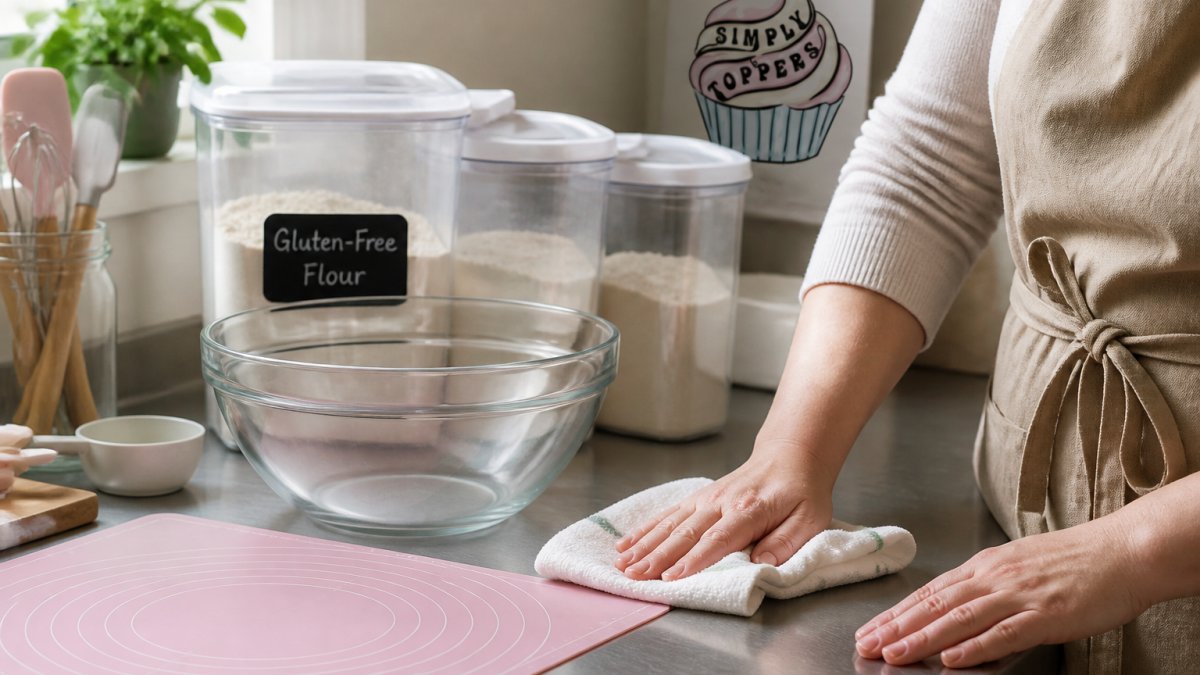
Here's what earns its place:
- A dedicated sieve. Flour dust spreads further than people expect, and a sieve used on wheat flour holds traces.
- Separate mixing bowls and a rolling pin. Wooden tools are porous and hard to clean thoroughly, so keep a gluten-free set.
- A silicone baking mat. It gives you a clean, washable surface that doesn't trap crumbs.
- Labelled storage containers. Clear, airtight tubs stop the wrong flour being grabbed mid-bake.
- A second toaster. If you toast gluten-free bread, a shared toaster is a common contamination point.
A common mistake is buying a beautiful new stand mixer and still using the old whisk attachment. Attachments count as equipment. Wash them thoroughly or keep a separate set.
How to Prevent Cross-Contamination in Home Baking
Preventing cross-contamination in home baking means controlling three things: shared tools, airborne flour and surfaces. Small, consistent habits do more than one deep clean.
Start with order of work. Bake allergen-free items first, before any wheat flour comes out, and clean down afterwards. Flour hangs in the air for a while after sieving, so give surfaces a wipe rather than a quick brush.
The practical checklist we'd suggest:
- Wash hands and dry them before handling allergen-free ingredients
- Use separate bowls, spoons and sieves for free-from baking
- Wipe worktops and scales with a clean cloth, not the tea towel
- Store free-from flours in sealed, labelled tubs above or away from other flours
- Keep decoration boxes closed until the cake is ready
- Check every packet's label on the day you bake, not the day you bought it
Dairy-Free Baking Substitutes That Actually Work
Dairy-free baking substitutes work best when you match the substitute to the job the dairy was doing. Fat for tenderness, liquid for moisture and acidity for rise all behave differently.
For cakes, plant-based spreads and oils generally swap in well for butter. For flavour and richness, oat, soya or coconut-based alternatives do the job in most sponge recipes. Buttermilk is easily replaced by plant milk with a spoonful of lemon juice left to sit for a few minutes.
A few swaps that hold up in practice:
- Butter in sponges: a block plant-based spread, not a tub spread, which has a higher water content
- Milk: unsweetened soya or oat milk for structure, coconut milk for a richer crumb
- Cream in ganache: a plant-based double cream alternative, warmed gently
- Eggs (where used for binding): commercial egg replacers are the most reliable option for beginners
What most guides miss is that dairy-free spreads vary enormously in fat content. A spread that works in a brownie may collapse a delicate sponge. Test one recipe at a time before committing to a celebration cake.
Choosing Allergen-Free Cake Decorations with Confidence
Allergen-free cake decorations are edible toppers and finishes made without the allergens you're avoiding, with clear ingredient information you can check. The decoration is often the last thing added and the least scrutinised part of the cake, which makes it the easiest place for a mistake to slip through.
This is where we put our effort at Simply Toppers. Our handmade sugar paste toppers are 100% edible, suitable for vegans and vegetarians, and free from dairy and gluten, so a decorated cake stays inclusive for the whole guest list. Every design is made by hand.
When you're buying decorations from any supplier, including us, check these points:
- A full ingredient list, not just a "free-from" badge
- Allergen statements covering nuts, gluten, dairy, egg and soya
- Storage and shelf-life guidance, so the topper still looks right on the day
- Lead time, especially for custom or handmade designs
If you're planning a party, order early and confirm delivery dates in writing. Handmade items take time, and a topper that arrives late is no help on the morning of a celebration.
Key Factors When Selecting Allergen-Friendly Baking Supplies
Selecting allergen-friendly baking supplies comes down to five factors: allergen clarity, dedicated use, certification, storage and timing. Weigh them in that order and most bad purchases rule themselves out.
| Factor | What to check | Why it matters |
|---|---|---|
| Allergen clarity | Full ingredient and "may contain" statements | Lets you judge risk, not guess it |
| Dedicated use | Tools kept only for free-from baking | Removes hidden contamination |
| Certification | Recognised free-from marks and testing | Backs up the claim on the pack |
| Storage | Sealed, labelled, separate containers | Stops mix-ups between bakes |
| Timing | Lead times and delivery confirmation | Ensures supplies arrive before the event |
On certification, Food Standards Agency allergen guidance sets out how allergen information should be presented and what "free-from" claims mean, so you know what a label is actually promising. For gluten specifically, Coeliac UK's guidance on the gluten-free diet explains why trace levels matter to people with coeliac disease.
Conclusion
The hardest part of allergen-friendly baking isn't the recipe. It's building a set of supplies you can trust, bake after bake, without second-guessing every spoon. Start with dedicated equipment, control cross-contamination, choose substitutes that suit the job, and buy decorations from suppliers who answer allergen questions openly.
That's the approach we take at Simply Toppers. Our handmade edible toppers have been vegan, vegetarian and free from dairy and gluten since 2013, and our award-winning designs are made to suit any occasion, from birthdays to baby showers. Browse our range or use our quick order form to find the right decoration for your next bake, and make a cake everyone can enjoy.
Frequently Asked Questions
What baking supplies are useful for allergen-friendly baking?
Start with dedicated tools that limit cross-contact: a separate set of mixing bowls, measuring cups, and a silicone baking mat kept only for allergen-free bakes. Add labelled airtight containers for gluten-free flours, a digital scale for precise measurements, and a thermometer to check bakes are cooked through. For decoration, choose 100% edible toppers that are certified vegan and gluten-free, like those from Simply Toppers, so you can trust what goes on the cake.
How can I prevent cross-contamination when baking at home?
Keep a separate shelf or cupboard for allergen-free ingredients and use dedicated utensils that never touch regular flour or nuts. Clean surfaces, scales, and mixers thoroughly before you start, and wash hands and aprons. Avoid sharing spoons between bowls, and store allergen-free flours in sealed containers away from open packets. If you bake with nuts or wheat regularly, consider a separate mixer bowl and beaters to reduce risk further.
How do I check whether cake decorations are free from allergens?
Read the ingredient list and any 'may contain' statements on the packaging, and look for clear certifications such as vegan and gluten-free logos. Reputable suppliers, like Simply Toppers, provide allergen information and hold awards such as Free From Food Awards, which show they have been independently checked. If you are unsure, contact the maker directly and ask about their production methods and testing before ordering for someone with a severe allergy.
What can I use instead of butter in vegan baking?
Plant-based block margarines and coconut oil work well for cakes and biscuits, while mashed banana, apple puree, or silken tofu can replace butter in some recipes for moisture. For shortbread and pastry, a good dairy-free block margarine gives the closest texture. Always check the label for milk traces, and adjust sugar and liquid slightly as substitutes behave differently. Experiment with small batches to find what suits your recipe.