

Vegan Gluten Free Cake Decorations: A 2026 Guide
GrandrankerTable of Contents
- What Vegan Gluten Free Cake Decorations Actually Are
- Types of Vegan Gluten Free Cake Decorations to Know
- How to Check Labels for Hidden Gluten in Cake Decorations
- Allergen-Friendly Cake Sprinkles: Choosing Safely
- Safe Cake Decorating Tips for Allergies
- DIY Vegan and Gluten-Free Decoration Ideas
- Storing Edible Decorations: Shelf Life and Best Practice
- Conclusion
Last Updated: August 18, 2026
What Vegan Gluten Free Cake Decorations Actually Are
Vegan gluten free cake decorations are edible embellishments made without any animal-derived ingredients and free from wheat, barley, rye, and other gluten-containing grains. In practice, this rules out a surprising number of mainstream products on supermarket shelves.
At Simply Toppers, we've been making handmade edible decorations since 2013. This guide covers what to look for on labels, which decoration types are naturally lower-risk, and how to avoid the cross-contamination pitfalls that even experienced bakers miss.
The gap between a product labelled "suitable for vegans" and one that is genuinely coeliac-safe is wider than most people expect. Below, we walk through every category of edible cake topper, the label-reading skills that matter, and DIY ideas for when you want complete control over every ingredient.
Vegan vs Vegetarian vs Gluten-Free: Why the Difference Matters
Vegan means free from all animal products: no eggs, dairy, honey, gelatine, beeswax, or shellac (a resin secreted by lac bugs, commonly used in confectionery glazes).
Vegetarian is broader. A vegetarian decoration may still contain dairy, eggs, or beeswax. Many mainstream sprinkles and dragees are vegetarian but not vegan.
Gluten-free is an entirely separate category. A product can be 100% vegan and still contain wheat starch. When catering for someone with coeliac disease alongside a vegan guest, you need decorations that satisfy both criteria simultaneously.
Types of Vegan Gluten Free Cake Decorations to Know
The range of allergen-friendly options available to bakers has expanded considerably. Knowing which category suits your project saves time and prevents mistakes.
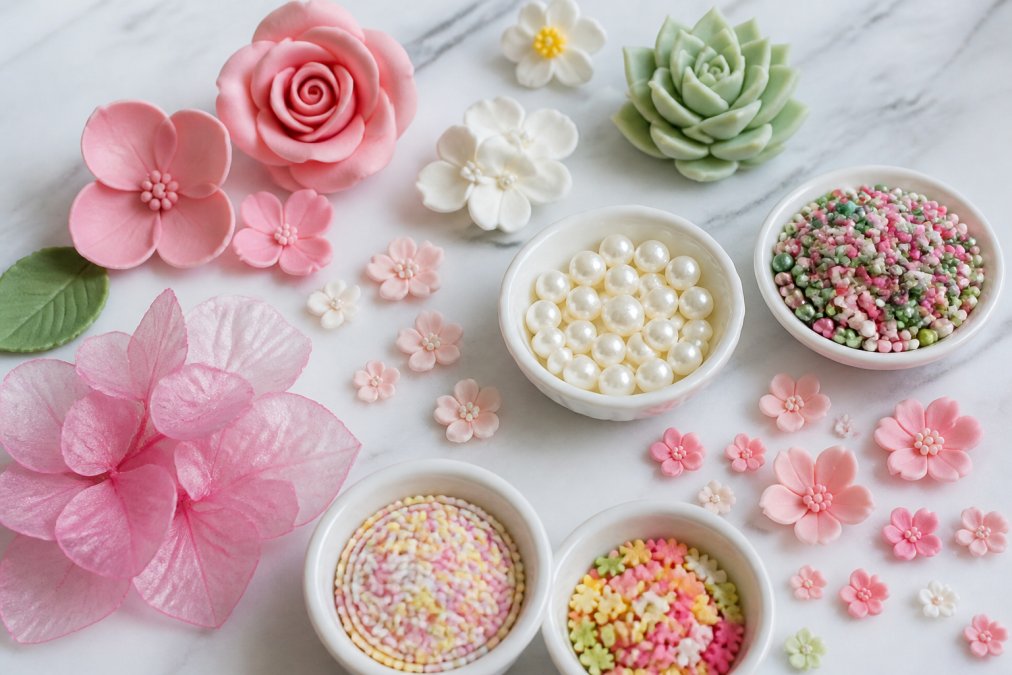
| Decoration Type | Key Ingredients | Best For | Watch Out For |
|---|---|---|---|
| Sugar paste toppers | Sugar, potato starch, vegetable fat | Shaped figures, themed designs | Gelatine in non-vegan versions |
| Wafer paper | Potato starch, water, vegetable oil | Flowers, wraps, printed sheets | Egg white in some brands |
| Icing sheets | Sugar, starch, vegetable glycerine | Photo prints, flat toppers | Dairy in some coatings |
| Sprinkles and pearls | Sugar, cornstarch, natural colouring | Scattering, borders | Carmine (E120) for colour |
| Edible glitter | Mica, sugar, starch | Shimmer effects | Shellac-based glitter |
Sugar Paste and Fondant Toppers
Sugar paste is the backbone of most shaped cake toppers. A vegan-friendly formulation replaces gelatine (derived from animal bones) with alternatives such as modified potato starch or vegetable-based gums. This creates a pliable, mouldable dough that holds fine detail and dries to a firm finish.
Fondant follows the same principle. Standard fondant often contains gelatine or animal-derived glycerine, but plant-based glycerine is functionally identical. When sourcing sugar paste toppers, check that the glycerine listed is vegetable-derived. If the label simply says "glycerine" with no qualifier, contact the manufacturer directly.
Wafer Paper and Icing Sheets
Wafer paper is one of the most naturally allergen-friendly decoration materials available. Traditional formulations use potato starch, water, and a small amount of vegetable oil. The result is a thin, edible sheet that can be shaped into flowers, wrapped around tiers, or printed with food-safe ink.
Icing sheets (also called sugar sheets or edible icing sheets) are similar but slightly thicker and more opaque. They're the substrate used for edible photo prints. Most are gluten-free by default, but some manufacturers add modified starch that may be wheat-derived. Always verify the starch source.
Edible Glitter, Pearls and Dragees
Edible glitter is where labelling gets complicated. There are three distinct categories:
- Truly edible glitter, made from sugar, starch, and mica-based colouring. Safe to eat, naturally vegan, and gluten-free.
- Non-toxic glitter, made from cellulose or plastic-based materials. Technically safe in small amounts but not designed to be eaten.
- Shellac-coated glitter, uses shellac as a glazing agent. Not vegan.
Edible pearls and dragees present a similar challenge. Many mainstream versions use shellac or carmine (E120, a red dye derived from insects). Plant-based alternatives use carnauba wax (from palm leaves) and natural plant-based colouring instead.
How to Check Labels for Hidden Gluten in Cake Decorations
Checking labels for hidden gluten is the single most important skill for anyone baking for a coeliac guest. The Coeliac UK guidance on food labelling is the most reliable reference point.
Ingredients to Watch For
Gluten hides under several names in confectionery:
- Wheat starch, used as a bulking agent in some sugar pastes and sprinkles
- Barley malt extract, occasionally used as a flavouring
- Modified starch, can be wheat-derived unless the label specifies potato, tapioca, or maize starch
- Glucose syrup, usually fine, but wheat-derived versions must be declared under UK food labelling regulations
- Natural flavourings, rarely contain gluten, but worth querying with the manufacturer if unsure
Under the UK Food Information Regulation (allergen labelling rules), the 14 major allergens, including wheat, must be emphasised in the ingredients list, typically in bold. This makes scanning labels significantly faster once you know what to look for.
What Certified Gluten-Free and Coeliac-Safe Claims Mean
Certified gluten-free means the product has been independently tested and contains fewer than 20 parts per million (ppm) of gluten, the threshold recognised under UK law.
Coeliac-safe is not a legally defined term, but many manufacturers use it to indicate the product meets the same 20ppm threshold. The Coeliac UK crossed-grain symbol is the most widely recognised certification mark.
A product "made in a gluten-free facility" offers stronger protection than one carrying a "may contain gluten" advisory, which indicates shared equipment or factory lines and carries real cross-contamination risk.
Allergen-Friendly Cake Sprinkles: Choosing Safely
Most people assume sprinkles are just sugar and colour. Mainstream sprinkles frequently contain wheat starch as a bulking agent, shellac as a glazing agent, carmine for red and pink shades, and dairy in chocolate-flavoured varieties.
Genuinely allergen-friendly sprinkles do exist, but they're a smaller subset of the market. When choosing:
- Check the allergen summary box, not just the ingredients list.
- Confirm the colouring agents. Natural colouring from plant sources (beetroot, spirulina, turmeric) is both vegan and gluten-free. Carmine (E120) is not vegan.
- Verify the starch source. Potato starch and cornstarch are the safest options. "Modified starch" without a source qualifier warrants a follow-up with the manufacturer.
- Look for a certified gluten-free mark if baking for someone with coeliac disease.
- Check the facility statement. Even a perfectly formulated sprinkle can pose a risk if packed on shared lines with wheat-containing products.
Safe Cake Decorating Tips for Allergies
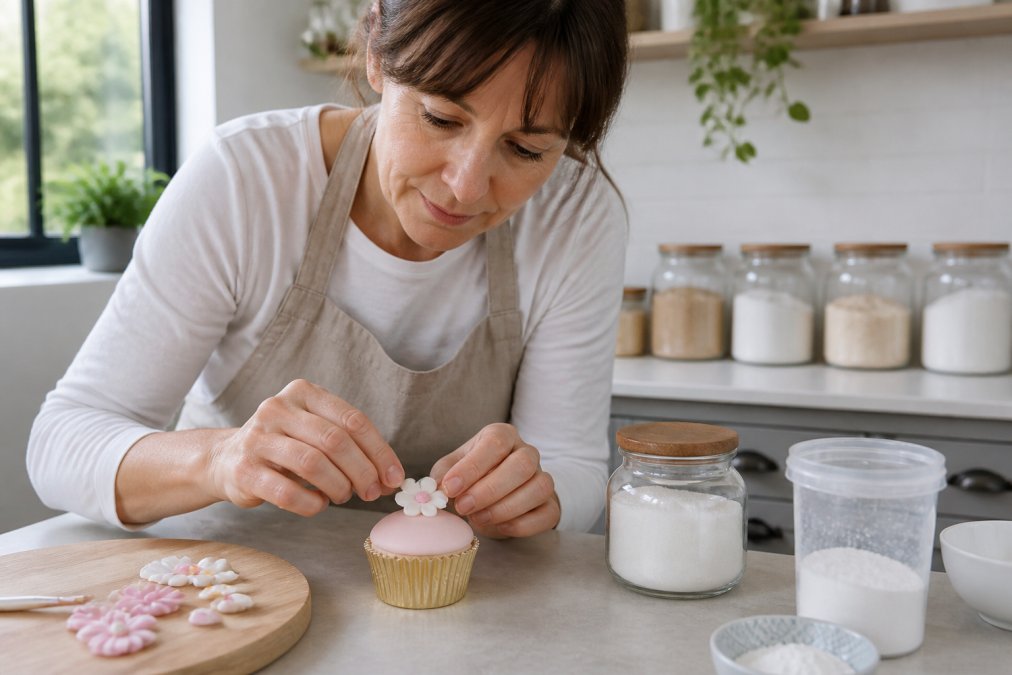
Safe allergen-friendly decorating is as much about process as it is about ingredients. Before you start, run through this checklist:
- All decorations confirmed vegan and gluten-free from label or manufacturer
- Work surfaces cleaned with hot water and washing-up liquid, then dried
- Separate utensils used (not shared with gluten-containing baking)
- Hands washed thoroughly before handling decorations
- Cake stored away from gluten-containing baked goods
Preventing Cross-Contamination at Home
Cross-contamination is the most common reason an allergen-friendly cake causes a reaction despite using "safe" ingredients. Flour becomes airborne during mixing and settles on surfaces, utensils, and open containers for hours.
The most effective approach is to bake the allergen-friendly cake first, before any gluten-containing baking takes place that day. If that's not possible, a thorough clean of all surfaces and a complete change of utensils is essential.
Key points often overlooked:
- Piping bags: use disposable bags for allergen-sensitive decorating; reusable bags are difficult to clean thoroughly.
- Turntables and boards: use a dedicated plastic or metal surface. Wooden boards absorb gluten and are impossible to fully decontaminate.
- Icing sugar: some brands are processed in facilities that also handle wheat. Check the label; certified gluten-free icing sugar is widely available.
- Sprinkle dispensers: if you keep a shared sprinkle pot on the counter, it may have been contaminated. Decant a fresh portion for allergen-sensitive work.
According to NHS guidance on coeliac disease management, even small amounts of gluten can trigger a response in people with coeliac disease. Process matters as much as ingredients.
DIY Vegan and Gluten-Free Decoration Ideas
Making your own decorations gives you complete ingredient control, the gold standard when baking for someone with multiple dietary requirements.
A basic vegan sugar paste can be made from icing sugar, potato starch, and vegetable shortening, bound with aquafaba (the liquid from a tin of chickpeas). Roll it thin, cut with a flower cutter, and leave to dry on a foam pad for 24 hours.
Wafer paper toppers
Wafer paper can be cut into shapes with scissors or a craft punch. Brush lightly with clear piping gel (check it's vegan and gluten-free) to adhere it to buttercream. Wafer paper flowers require no specialist equipment beyond scissors and patience.
Natural colour paint
Mix turmeric into clear alcohol (vodka works well) for gold paint, or use beetroot powder for pink and red tones. These are entirely plant-based, naturally gluten-free, and produce vivid finishes on dried sugar paste.
Chocolate bark toppers
Dark chocolate (check it's dairy-free and produced in a gluten-free facility) melted and spread thin, then scattered with freeze-dried fruit, toasted coconut, and certified gluten-free sprinkles before setting, makes a striking topper requiring no specialist skills.
The Vegan Society guidance on plant-based ingredients is a useful reference when checking whether specific baking components qualify as vegan.
Storing Edible Decorations: Shelf Life and Best Practice
Edible decorations are shelf-stable when stored correctly. Moisture is the primary enemy of sugar paste, wafer paper, and sprinkles alike.
Sugar paste toppers should be stored in an airtight container at room temperature, away from direct sunlight. Refrigeration is not recommended; humidity causes sugar paste to sweat and soften. Properly dried sugar paste toppers remain in good condition for several months.
Wafer paper is extremely sensitive to humidity. Store it flat in a sealed bag or box with a silica gel sachet. Once on a cake, add wafer paper decorations as close to serving time as possible, particularly in warm or humid conditions.
Icing sheets follow similar rules to wafer paper. Keep them sealed in their original packaging until use.
Sprinkles and dragees are the most forgiving. Stored in a sealed container away from moisture and heat, they typically remain usable for 12-24 months. Check the best-before date on the pack; colour and texture can degrade past this point.
If placing decorations on a buttercream-frosted cake that will sit at room temperature for several hours, sugar paste toppers will hold their shape well. Wafer paper may soften slightly where it contacts the frosting, particularly in a warm room. Plan accordingly.
Baking for guests with dietary requirements shouldn't mean compromising on the finish of your cake. Simply Toppers has been making 100% vegan, dairy-free, and gluten-free handmade sugar paste decorations since 2013, with award-winning designs recognised at the Free From Food Awards 2025 and Scotland's Prestige Awards 2025/2026. Every decoration is made to be both beautiful and genuinely safe for those who need it. Use the Quick Order Form on the Simply Toppers website to find the right topper for your occasion.
Frequently Asked Questions
Are all vegan cake decorations automatically gluten-free?
No. Vegan means no animal-derived ingredients, while gluten-free means no wheat, barley, rye or related grains. A decoration can be vegan but still contain gluten, for example, some wafer paper products use wheat starch as a base. Always check the ingredient list separately for both dietary requirements, and look for products that explicitly state they are dairy-free, plant-based and certified gluten-free or coeliac-safe.
How can I verify if cake sprinkles are vegan and gluten-free?
Start by reading the full ingredient list. Avoid sprinkles containing shellac (E904), carmine (E120), beeswax, egg albumen or confectioner's glaze, as these are animal-derived. For gluten, watch for wheat starch, glucose syrup from wheat or barley malt extract. Check for a certified gluten-free symbol or a clear allergen statement. Contact the manufacturer directly if the label uses the phrase 'may contain' without specifying which allergens are involved.
What ingredients should I avoid in cake decorations if I have coeliac disease?
Avoid any decoration listing wheat, barley, rye or oats in the ingredients or allergen box. Hidden sources include glucose syrup derived from wheat, modified starch without a named plant source, and barley malt extract used in some writing icing products. Under UK food labelling law (Regulation (EU) No 1169/2011 as retained in UK law), the 14 major allergens including cereals containing gluten must be emphasised in bold on pre-packed food labels, making them easier to spot.
How do I store vegan and gluten-free cake decorations to maintain quality?
Most sugar paste and fondant toppers are shelf-stable and should be stored in a cool, dry place away from direct sunlight and humidity. Avoid the fridge, as condensation softens sugar paste and causes colours to bleed. Keep decorations in their original sealed packaging until use. Wafer paper and icing sheets are particularly sensitive to moisture, so reseal packaging immediately after opening. Properly stored, most edible decorations retain quality for several months.
This article was written using GrandRanker