

Vegan Sugar Flowers for Cakes: A 2026 Guide
Editorial TeamTable of Contents
- Types of Edible Vegan Sugar Flowers for Cakes
- Vegan Gluten Free Cake Decorations: Materials and Ingredients
- Handmade Sugar Paste Flowers: Making Your Own
- Storing Vegan Sugar Flowers: Shelf Life and Humidity Control
- Ready-Made Vegan Sugar Flowers: When to Buy vs. Make
- Allergen Safety and Certifications
- Frequently Asked Questions
Last Updated: September 3, 2026
Types of Edible Vegan Sugar Flowers for Cakes
Vegan sugar flowers have transformed cake decoration for home bakers and professionals alike. At Simply Toppers, we've spent over a decade perfecting handmade edible flowers that deliver the elegance of fresh blooms without animal products, dairy, or gluten. Unlike fresh flowers, which wilt within hours and can harbour pesticides, edible sugar flowers stay vibrant for weeks when stored properly (peer-reviewed research). They're made from plant-based modelling paste, hand-crafted petal by petal, then finished with edible glitter for that professional shimmer.
Roses and Rose Buds
Roses dominate the edible flower world for good reason. They're instantly recognisable, photograph beautifully, and suit almost any occasion. A single large rose anchors a naked cake, whilst clusters of smaller roses create texture across tiered designs.
Rose buds offer a softer alternative, perfect for spring celebrations or when you want delicate detail rather than bold impact. Many bakers layer buds with full blooms to create depth. From Simply Toppers, our glittered rose buds come in vibrant colours like deep blues, soft pinks, and rich purples, each hand-painted and finished with edible shimmer.

Rose size matters as much as colour. A 2cm rose gets lost on a large wedding cake but looks perfect on a cupcake. A 6cm rose dominates a single-tier birthday cake. Simply Toppers offers sizes from small through to extra-large statement pieces, ensuring you're not forced to buy more than you need or compromise on scale.
Peonies, Tulips, and Seasonal Blooms
Beyond roses, seasonal flowers add variety and character. Peonies suggest romance and spring. Tulips evoke freshness. Ranunculus bring texture with their layered petals. Each flower type signals something different to your guests, both aesthetically and emotionally.
Seasonal blooms anchor your cake to the time of year. A winter celebration with white and silver flowers reads differently than summer pastels or autumn golds. Rather than waiting for fresh peonies to be in season, you can order edible versions year-round in whatever colours suit your vision.
Vegan Gluten Free Cake Decorations: Materials and Ingredients
Vegan sugar paste starts with icing sugar, gum tragacanth or CMC (carboxymethyl cellulose), vegetable shortening or coconut oil, and water. Bakers then add edible colours, edible glitter, and sometimes flavouring. The absence of egg white, gelatine, or dairy makes it vegan-friendly and safe for anyone with allergies.
Gumpaste vs. Fondant for Vegan Flowers
Gumpaste and fondant are not interchangeable, and the difference matters for your finished cake.
Fondant is smoother, more pliable, and easier to work with. It holds colour beautifully and dries to a firm finish. However, it's heavier and less delicate, making it unsuitable for fine flower detail. It also has a denser, slightly rubbery texture when bitten.
Gumpaste (or flower paste) is the professional choice for flowers. It's stiffer, dries faster, and allows for thinner, more realistic petals. You can stretch gumpaste to near-transparency, creating roses that look almost alive. Once dry, it's more fragile than fondant, so handle it carefully.
For vegan versions, both exist. Simply Toppers uses a proprietary vegan gumpaste blend that balances workability with delicate, professional finish. If you're buying ready-made flowers, this distinction matters less. But if you're making your own, gumpaste is essential for anything beyond basic shapes.
Plant-Based Ingredients and What to Avoid
Safe to use: Icing sugar, vegetable shortening, coconut oil, cornflour, gum tragacanth, CMC powder, plant-based glycerine, edible colours (check they're not cochineal-based), edible glitter, lemon juice, water, alcohol-free vanilla extract.
Avoid: Gelatine (animal-derived), egg white, dairy butter, milk powder, beeswax, shellac. Some edible glitters use gum arabic, which is vegan but can trigger sensitivities.
A hidden complexity is cross-contamination. A vegan gumpaste made in a facility that also processes dairy or eggs carries risk for anyone with severe allergies. Simply Toppers manufactures in a dedicated vegan facility with no shared equipment or cross-contamination.
Handmade Sugar Paste Flowers: Making Your Own
Making vegan sugar flowers at home is achievable but time-intensive. Most people spend their first 10-15 flowers learning the technique. By flower 50, you'll be confident.
The appeal is clear: you control every variable. The downside is equally clear: it takes hours and requires specific tools. A dozen handmade roses might take 6-8 hours for a beginner.
DIY Vegan Gumpaste Recipe
Here's a working formula for vegan gumpaste that delivers professional results:
Ingredients:
- 500g icing sugar (sifted)
- 1 tablespoon gum tragacanth (or 1.5 teaspoons CMC powder)
- 2 tablespoons vegetable shortening or coconut oil
- 1 egg-white equivalent (3 tablespoons aquafaba, the liquid from tinned chickpeas)
- ½ teaspoon lemon juice
- Edible colours as needed
- Cornflour for dusting
Method:
Sift the icing sugar and gum tragacanth together into a large bowl. Make a well in the centre and add the shortening, aquafaba, and lemon juice. Using a wooden spoon or your hands, bring the dry ingredients into the wet. Mix until a shaggy dough forms. Knead by hand for 5-10 minutes until smooth and elastic. If too sticky, dust with cornflour and keep kneading. If too dry, add aquafaba a few drops at a time.
Divide into portions. Add edible colour to each and knead until even. Wrap tightly in cling film and rest for at least 30 minutes before use. The paste keeps in an airtight container for up to two weeks at room temperature.
Step-by-Step Assembly and Colouring
Making a rose from gumpaste follows this sequence:
Step 1: Prepare your workspace. Dust a clean surface with cornflour. Have a small bowl of water nearby for sealing petals and a foam pad to soften petals as you shape them.
Step 2: Roll a cone. Take a pea-sized ball of gumpaste and roll it into a cone shape. This is your rose's centre. Secure it to a small dowel or cocktail stick using a dab of water.
Step 3: Create petals. Roll out a small ball of gumpaste thin (2-3mm). Using a petal cutter or knife, cut a petal shape. Place it on the foam pad and gently thin the edges using a ball tool. The goal is delicate, slightly curved edges like a real rose petal.
Step 4: Wrap petals around the cone. Attach the first petal to the cone using a dab of water. Wrap it around the centre so it partially covers the cone. Add subsequent petals, overlapping them slightly and curving them outward. Each new petal should sit slightly lower and more open than the last.
Step 5: Continue building. A small rose uses 5-7 petals. A medium rose uses 10-15. A large, fully opened rose might use 20+.
Step 6: Dry the rose. Once happy with the shape, place the rose upright (still on its dowel) in a cup or vase. Let it dry for at least 24 hours in a cool, dry place.
Step 7: Add colour and glitter. Once dry, dust the rose with edible petal dust using a soft brush for depth and dimension. Then brush a tiny amount of edible glue onto the petals and dust with edible glitter. Let the glue dry completely before handling.
Colouring tips: Start with a pale base colour in your gumpaste, then layer dust or glitter on top for dimension. Real roses have darker tones at petal edges and lighter tones toward the centre, mimic this for realism. Peach and cream roses are forgiving; deep reds and purples show every brushstroke.
The whole process takes 30-45 minutes for a beginner, 10-15 minutes for someone experienced.
Storing Vegan Sugar Flowers: Shelf Life and Humidity Control
One of the biggest advantages of sugar flowers over fresh ones is longevity. A fresh rose lasts three to five days (peer-reviewed research). A sugar flower lasts weeks, sometimes months, if stored correctly.
Room temperature storage: Keep sugar flowers in an airtight container in a cool, dry place (below 20°C is ideal). They'll last 4-6 weeks without degradation. The enemy is humidity. If moisture creeps in, the paste softens and loses its shape.
Refrigerator storage: If you need flowers to last longer, seal them in an airtight container and refrigerate. They'll keep for 2-3 months. Leave them in the sealed container for 10-15 minutes at room temperature before opening, allowing the temperature to equalise and preventing condensation.
Freezer storage: For long-term storage (up to 6 months), place flowers in an airtight container with silica gel packets and freeze. Thaw them at room temperature in the sealed container before use.
On the cake: Once a sugar flower is placed on a cake, its lifespan depends on the cake's environment. A cake in a cool room lasts longer than one in warm sunlight or near a radiator. Generally, sugar flowers on a finished cake stay perfect for 4-8 hours at room temperature, longer if refrigerated.

Ready-Made Vegan Sugar Flowers: When to Buy vs. Make
This is the practical decision point for most people: do you make your own flowers or buy them?
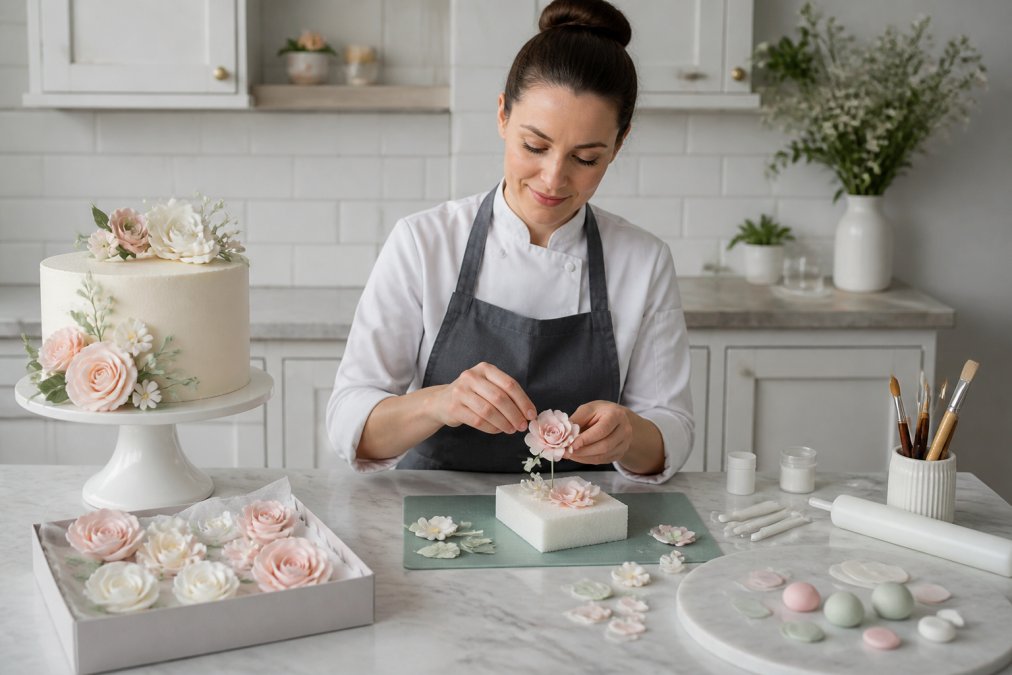
Buy ready-made if: You're short on time, decorating multiple cakes, wanting consistency across flowers, or lacking confidence in your crafting skills. A dozen handmade roses takes 6-8 hours. A dozen ready-made roses arrive ready to place.
Make your own if: You have time to spare, want complete creative control, are on a tight budget, or find the process enjoyable. The ingredient cost for a dozen homemade roses is roughly £1-2. If you're only decorating one or two cakes a year, the time investment might not be worth it. If you're decorating six cakes a year, making your own becomes economical.
Choosing the Right Flower for Your Cake Theme
Flower selection isn't arbitrary. The right choice reinforces your cake's theme and occasion.
Weddings: Roses (especially in whites, creams, and blush tones) or peonies signal romance and formality. Ranunculus work beautifully for a softer, garden-party aesthetic.
Birthday cakes: Any colour, any flower works. Bright roses, colourful peonies, or mixed arrangements all suit. Match the colour palette to the person's preferences or the party's theme.
Baby showers: Soft pastels, pale pink, pale blue, pale yellow. Roses and peonies in these tones read "gentle" and "celebratory."
Garden parties or spring events: Tulips, ranunculus, or mixed wildflower-style arrangements echo the season.
Autumn and winter celebrations: Deep jewel tones, burgundy, forest green, gold, silver. Roses in these colours feel sophisticated and seasonal.
Seasonal colour guide:
- Spring: pastels, fresh greens, white
- Summer: bright, saturated colours, mixed arrangements
- Autumn: golds, oranges, deep reds, burgundy
- Winter: whites, silvers, deep purples, forest greens
The secondary decision is size. A single large focal flower works on a naked cake. Multiple smaller flowers create texture on a fully frosted cake. A cascade of flowers (large at the top, graduating to small at the bottom) draws the eye downward on tiered cakes.
Simply Toppers offers range here. Small roses work as fillers or for cupcakes. Medium roses suit most cakes. Large roses make statements. Extra-large single roses anchor a design.

Allergen Safety and Certifications
If your guest list includes anyone with allergies or intolerances, sugar flowers offer control that fresh flowers never could. They're made from a known, fixed ingredient list with no pesticides, pollen, or mystery compounds.
However, "vegan" and "allergen-free" aren't synonymous. A flower can be vegan but still contain tree nuts, sesame, or soy if those ingredients are in the paste or colours. Always request the full ingredient list before ordering, especially for severe allergies.
Simply Toppers manufactures in a dedicated facility with no cross-contamination from common allergens. Our ingredient lists are transparent and available on every product page. For anyone with coeliac disease or non-coeliac gluten sensitivity, our flowers are tested and verified gluten-free, not just made without wheat.
If you're making flowers at home, source your gumpaste ingredients carefully. Buy from suppliers who test for allergens and clearly label their products. Aquafaba (chickpea liquid) is a common allergen for people with legume sensitivities, so disclose that to guests if you're using it.
Celebrating with inclusive decorations means everyone at your table can enjoy the whole cake, not just the frosting. Vegan sugar flowers solve that problem beautifully. Whether you choose to make them yourself or order ready-made from Simply Toppers, you're choosing decorations that look stunning and taste delicious, without compromise.
Our handmade vegan sugar flowers are designed for bakers who refuse to choose between beauty and inclusivity. Each flower is crafted by hand, finished with edible glitter, and guaranteed free from dairy, gluten, and animal products. Order custom colours or choose from our standard palette, either way, your cake will look professionally decorated and taste genuinely delicious.
Frequently Asked Questions
Q: How do I know if vegan sugar flowers are truly gluten-free and safe for coeliac disease?
A: Look for suppliers with third-party certifications or allergen testing documentation. Reputable makers clearly state their ingredients and manufacturing processes. Check for statements confirming they're made in dedicated gluten-free facilities. Simply Toppers products are 100% vegan, dairy-free, and gluten-free, with transparent ingredient lists. Always ask suppliers directly about their testing protocols if you have coeliac disease or severe gluten sensitivity.
Q: Can I make vegan sugar flowers at home, or should I buy handmade sugar paste flowers?
A: Both options work well. Handmade sugar paste flowers require time, patience, and specialist tools like piping bags and flower cutters. If you're short on time or want professional-quality results, ready-made options like handmade sugar paste flowers from established makers offer consistent quality and save hours of preparation. Many home bakers combine both: purchasing large statement flowers and making smaller fillers themselves.
Q: How long do vegan sugar flowers last on a cake?
A: Properly stored vegan sugar flowers can last 2-4 weeks in airtight containers before being placed on a cake. Once on the cake, they remain stable for 4-8 hours at room temperature. Humidity is the main enemy, in damp conditions, they may soften or lose their shape. For events lasting several hours, keep your cake in a cool, dry space away from direct sunlight and moisture sources.
Q: What's the difference between gumpaste and fondant for vegan cake flowers?
A: Gumpaste dries harder and holds intricate details better, making it ideal for delicate petals and realistic flowers. Fondant is softer, smoother, and easier to work with for beginners but doesn't hold fine details as well. For vegan decorations, both can be made plant-based using gum arabic, cornflour, and plant-based gelling agents instead of gelatin or egg white. Gumpaste flowers typically look more lifelike, whilst fondant flowers offer a sleeker finish.
This article was written using GrandRanker