

7 Hidden Animal Ingredients in Cake Sprinkles to Check
Editorial TeamLast Updated: 31 October 2026
Quick Summary
Some cake sprinkles contain animal-derived ingredients that are easy to miss, including carmine (E120) for red colour, shellac (E904) for shine, and gelatine. Read the full ingredient list rather than front-of-pack claims, and watch for milk derivatives such as whey and casein, and for egg-based coatings.
- Carmine, also called cochineal or E120, is a red colouring made from crushed insects.
- Shellac, listed as confectioner's glaze or E904, is a resin secreted by the lac bug.
- Whey, casein, milk powder and lactose are milk ingredients, not plant-based ones.
- A "may contain" warning is cross-contamination, not an ingredient, so read both.
- Natural flavourings can be animal or plant sourced, so contact the manufacturer if unclear.
Table of Contents
- Why Cake Sprinkles Can Contain Animal Ingredients
- How to Read an Ingredient List on Sprinkles
- Carmine in Food Colouring: The Red Ingredient to Watch
- Shellac in Food and Confectioner's Glaze
- Gelatine, Milk Derivatives and Egg-Based Ingredients
- Natural Flavours, E-Numbers and Ambiguous Names: A Quick Lookup
- Telling Apart Vegan Cake Sprinkles From Cross-Contamination Warnings
- Choosing Your Next Sprinkles for Your Cake Bake
- Frequently Asked Questions
Why Cake Sprinkles Can Contain Animal Ingredients
Many people assume sprinkles are simply sugar and colour. That's not always the case. Some sprinkles and cake decorations contain ingredients that come from animals, and these are easy to miss on a quick glance at the packet.
Simply Toppers makes vegan and vegetarian edible decorations, so we see this question come up often. Knowing what to look for helps you choose decorations that suit your guests, your diet, or your allergy needs.
Animal-derived ingredients can hide in plain sight. Some are obvious, like gelatine. Others use names that don't sound animal-based at all. Taking a few minutes to check the label is the best way to be sure.
How to Read an Ingredient List on Sprinkles
Ingredient lists are required to show everything in the product, listed by weight, starting with the largest amount. Here's a simple way to check one:
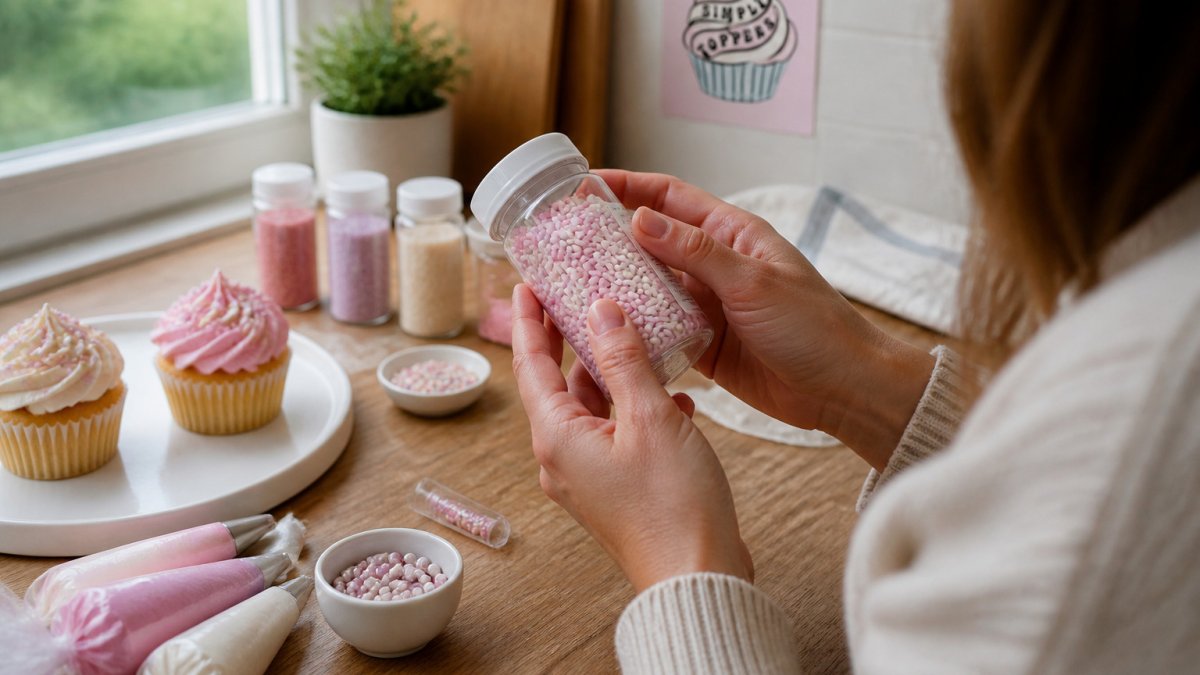
- Find the full ingredient list, not just the front-of-pack claims.
- Look for animal words such as gelatine, carmine, shellac, whey, casein, egg, and honey.
- Check any colour codes, such as E120 or E904.
- Scan for vague terms like "natural flavouring" and note them.
- If the label is unclear, contact the manufacturer before you buy.
Front-of-pack wording like "suitable for vegans" is useful, but the ingredient list is what tells you the full story.
Carmine in Food Colouring: The Red Ingredient to Watch
Carmine, also called cochineal or E120, is a red colouring made from crushed insects (Approved additives and E numbers). It's often used to make red and pink sprinkles look bright. Many vegans and vegetarians avoid it for this reason.
Watch out: a sprinkle that looks plant-based can still contain carmine if the red colour is powder-based. Always read the colour names in the ingredient list.
Shellac in Food and Confectioner's Glaze
Shellac is a resin secreted by the lac bug. It's used as a glaze to make sweets and some sprinkles shiny. You may see it listed as confectioner's glaze or E904.
Gelatine, Milk Derivatives and Egg-Based Ingredients
Gelatine comes from animal collagen, usually pork or beef. In sprinkles, it's sometimes used to bind sugar decorations or give a glossy finish. Milk derivatives such as whey, casein, milk powder and lactose can appear in sprinkles that are otherwise plant-based, often as a carrier for flavour or colour. Egg white or albumen can show up in some coatings and glazes.
These ingredients are easy to miss because they don't always sound animal-derived. "Whey powder" or "casein" on a sprinkle packet is a milk ingredient, not a plant one. "Albumen" is egg white. If you need a dairy-free or egg-free product, check each of these names carefully. Vigilance remains essential when scanning labels for other obscure substances, as spotting hidden additives like maltodextrin requires a similarly discerning eye for detail.
It's also worth knowing the difference between an ingredient and a cross-contamination warning. A "may contain milk" or "made in a factory that handles egg" statement is not an ingredient, it's a precautionary allergen label. For someone with a severe allergy, that warning matters. For someone following a vegan diet, the ingredient list is the main thing to check. Read both, but don't confuse the two.
Simply Toppers decorations are dairy-free and gluten-free, but it's still worth reading the label on any product you buy, including ours.
Natural Flavours, E-Numbers and Ambiguous Names: A Quick Lookup
Some ingredient names are unclear. "Natural flavourings" can come from animal or plant sources, and the label doesn't always say which. The same goes for certain E-numbers and colour names. Use this quick reference to connect what you see on a sprinkle packet with where it comes from.
| Ingredient name or E-number | What it is | Source | Suitability note |
|---|---|---|---|
| E120 (carmine, cochineal, carminic acid) | Red colour | Crushed cochineal insects | Animal-derived; avoid for vegan and vegetarian diets |
| E904 (shellac, confectioner's glaze, resinous glaze) | Glazing agent | Resin secreted by the lac bug | Animal-derived; common on shiny sprinkles |
| E901 (beeswax, white beeswax) | Glazing agent | Beeswax | Animal-derived; not vegan |
| E913 (lanolin) | Glazing agent | Sheep wool grease | Animal-derived; not vegan |
| E966 (lactitol) | Sweetener | Milk sugar | Milk-derived; not vegan or dairy-free |
| Gelatine (gelatin) | Gelling agent | Animal collagen, usually pork or beef | Animal-derived; not vegan or vegetarian |
| Whey, casein, milk powder, lactose | Milk derivatives | Milk | Animal-derived; not vegan or dairy-free |
| Egg white, albumen, egg powder | Binder or coating | Egg | Animal-derived; not vegan |
| Honey | Sweetener | Bees | Animal-derived; not vegan |
| Natural flavouring | Flavour | Plant or animal source, unspecified | Ambiguous; check with the manufacturer |
| Beetroot juice concentrate, spirulina, anthocyanins | Plant-based colours | Plants, algae | Suitable for vegan diets |
If a name isn't on this list, search it or ask the producer. Labels change, so a product you bought before may now be different. For a current check, look at the packaging in your hand rather than an old online listing, and contact the manufacturer if the ingredient list is incomplete or the wording is vague. A quick email asking "Is this product suitable for vegans?" is often the fastest way to get a clear answer.
Telling Apart Vegan Cake Sprinkles From Cross-Contamination Warnings
A "may contain" or "made in a factory that handles" warning is about cross-contamination, not ingredients. It means the product may have traces of something it doesn't contain on purpose. This is a separate issue from the ingredient list.
For a vegan decoration, the ingredient list matters most. For someone with a severe allergy, the cross-contamination warning matters too. Read both before you decide.
Choosing Your Next Sprinkles for Your Cake Bake
When you're ready to choose, start with the ingredient list and the colour names. Then check any allergy or cross-contamination warnings that apply to your guests.
If you want a clearly labelled vegan option for your next bake, you can browse our 12 Glittered Coloured Roses Vegan Edible Cupcake Toppers or our 6 Edible Vegan Pumpkin Cupcake Toppers for a seasonal theme. For a closer look at vague labelling, read Are Natural Flavourings Best for Sugar Paste?. Our toppers are handmade and can be custom made, so if you have a specific design in mind, get in touch with Simply Toppers to talk through your order.
Frequently Asked Questions
Are ingredients in sprinkles listed by weight?
Yes. Ingredients are generally listed in descending order by weight, so the first ingredient is the one present in the largest amount. Check the full list rather than only the front of the pack, because a small amount of a sensitive ingredient, such as carmine or shellac, can still appear further down. If a product is labelled vegan or vegetarian, that claim is the manufacturer's own, so confirm it against the list before you buy.
Do sprinkles contain shellac?
Some do. Shellac is a resin secreted by the lac insect and is used as a glaze on certain confectionery to make it shine. It may appear as shellac, confectioner's glaze or a similar term. Not every sprinkle contains it, so look for the word on the ingredient list. If you are unsure, contact the manufacturer or choose a product that clearly states it is suitable for vegans.
What is carmine, and can it be used in cake decorations?
Carmine, also called cochineal or E120, is a red colouring made from crushed female cochineal insects. It is sometimes used in pink and red sprinkles and cake decorations. Look for E120, carmine or cochineal on the label. Plant-based alternatives such as beetroot juice concentrate are often used instead, but you should still check the list for each product, as formulations can change.
How can you tell whether cake sprinkles are vegan?
Read the full ingredient list and look for animal-derived ingredients such as gelatine, carmine, shellac, whey, casein, milk or egg. A clear vegan label is helpful, but it should match the list. A warning such as 'may contain traces of milk' describes cross-contamination on a shared production line, which is different from an ingredient. Both matter if you are avoiding animal products, so decide how strict you need to be before you buy.
