

Are Natural Flavourings Best for Sugar Paste?
Editorial TeamLast Updated: 29 October 2026
Quick Summary
Oil-based and concentrated natural flavourings are best for sugar paste because they deliver strong flavour without adding moisture, so the paste keeps its texture. Start with two to three drops per 250g of paste, knead well and rest it for 30 minutes before rolling.
- Add flavour a drop at a time and knead for a full minute between additions.
- Water-based flavourings can make sugar paste tacky and prone to tearing.
- Vanilla paste darkens pale paste, so choose a clear flavouring for a pure white finish.
- Wrap flavoured paste tightly and use it within a few days as flavour fades.
- Check the full ingredient list for alcohol, dairy, nuts and sulphites before buying.
Table of Contents
- Why Flavour Sugar Paste at All?
- How to Flavour Sugar Paste Without Ruining the Texture
- The Best Natural Cake Flavourings and What Each One Does
- Finding the Best Flavouring for Fondant: A Comparison
- Natural Versus Artificial: What the Label Tells You
- How to Make Sugar Paste Soft Again After Flavouring
- Dosage, Colour and How Long the Flavour Lasts
- Ordering Toppers That Complement Your Flavoured Sugar Paste
- Frequently Asked Questions
Why Flavour Sugar Paste at All?
Most sugar paste tastes of one thing: sugar. If you are unsure whether it is worth the effort, our honest review of how sugar paste toppers taste answers the question directly.
At Simply Toppers, we have made handmade edible decorations since 2013. A cake topper is the last thing a guest eats, so it should leave a good impression rather than a sugary sigh.
The catch is that sugar paste is a delicate material. Add too much liquid and it slumps. Add the wrong kind of flavouring and it weeps or cracks.
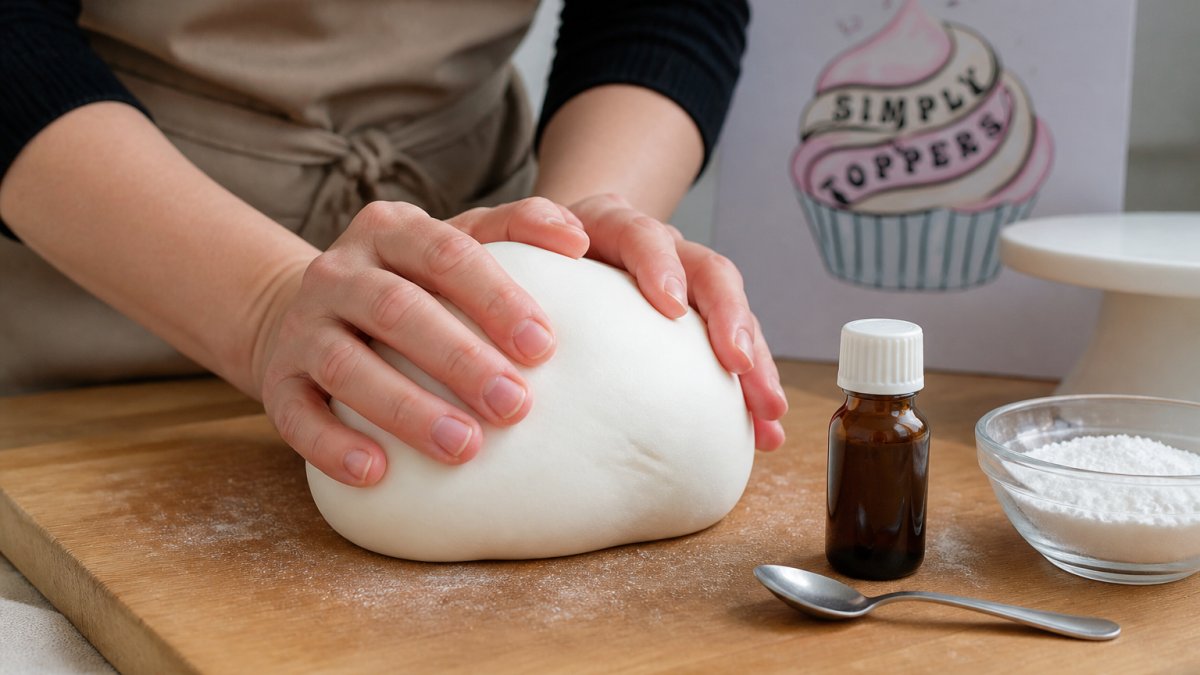
How to Flavour Sugar Paste Without Ruining the Texture
The golden rule is to add flavour in tiny amounts and knead it in thoroughly. Sugar paste is mostly icing sugar, glucose and a little vegetable fat, so it has very little spare moisture to give.
Work through it like this:
- Weigh your paste first. Note the amount so you can repeat the result later.
- Use a concentrated flavouring. Extracts, essences, pastes and oil-based flavourings carry flavour without much water.
- Add a drop at a time. Knead for a full minute between additions so the flavour spreads evenly.
- Stop before the paste turns tacky. If it starts to stick to the board, you have gone too far.
- Wrap and rest it. Leave the paste for 30 minutes so the flavour settles before you roll it out.
Watch out: water-based flavourings such as fruit juices or alcohol-heavy extracts can make sugar paste sticky and prone to tearing.
The Best Natural Cake Flavourings and What Each One Does
Natural cake flavourings fall into two broad families: extracts and essences, which are usually alcohol or water based, and oil-based or concentrated flavourings, which are stronger and kinder to sugar paste. Choosing the right family matters more than choosing the flavour.
Extracts, Essences and Pastes
Extracts are made by steeping the flavour source in alcohol, while essences are often a lighter, more diluted version. Both work well in sugar paste if used sparingly. Vanilla extract is the safest starting point, and vanilla paste adds the familiar flecks along with a deeper flavour.
Almond extract is punchy and suits marzipan-style bakes, but a little goes a long way. Coffee and chocolate extracts bring warmth to darker pastes. Essences such as strawberry, raspberry, lemon and orange are widely available and give a clean, recognisable flavour.
Oil-Based and Concentrated Flavourings
Oil-based flavourings suit sugar paste when you want intensity without extra moisture. Because oil and fat mix readily, they blend into the paste without making it wet. Concentrated flavourings work the same way: a couple of drops deliver a bold result.
Passion fruit, mango and citrus flavourings are especially good in oil form, as they hold their character without turning the paste sour. Herbs and spices, such as a hint of cinnamon or cardamom, can be added as a fine powder, though they will tint the paste.
Finding the Best Flavouring for Fondant: A Comparison
The best flavouring for fondant depends on how strong a flavour you want, how much moisture the paste can take, whether you need to keep the colour pale, and how long the flavour must last.
| Flavouring type | Strength | Effect on texture | Effect on colour | Starting dose per 250g paste | Flavour longevity |
|---|---|---|---|---|---|
| Vanilla extract | Mild | Slight softening | Darkens pale paste a little | ¼ tsp | Fades after 3-4 days uncovered |
| Vanilla paste | Medium | Minimal | Flecks and darkening | ¼ tsp | Holds well for a week wrapped |
| Alcohol-based essences | Light to medium | Can soften if overused | Usually clear, some carry faint colour | ¼-½ tsp | Moderate; alcohol dissipates |
| Oil-based flavourings | Strong | Almost none | Clear unless coloured | 2-3 drops | Strong for a week or more |
| Concentrated flavourings | Strong | Minimal | Clear unless coloured | 1-2 drops | Strong; dose by the drop |
| Natural fruit powders | Medium | Can dry the paste | Tints strongly | ½-1 tsp | Good, but colour deepens over time |
Oil-based and concentrated options win on control and on protecting the paste's texture, because they carry flavour without adding water.
A few practical rules sit behind the table:
- Dose by weight, not by eye. Weigh the paste first, then scale the starting dose. Doubling the paste means doubling the drops, not guessing.
- Taste a small piece after resting. Flavour blooms as the paste rests, so a piece that tastes right straight away will often taste too strong after 30 minutes.
- Match the flavouring to the filling. A bold oil-based citrus will cut through a sharp fruit filling; a mild vanilla extract will disappear under a heavy chocolate ganache.
- Keep a note of what worked. Record the paste weight, flavouring type and number of drops so you can repeat a result rather than rediscover it.
If you need a pure white finish, choose a clear oil-based or concentrated flavouring and avoid vanilla paste and fruit powders.
Natural Versus Artificial: What the Label Tells You
A "natural flavouring" label means the flavour comes from a plant or animal source, but it says nothing about quality, strength or what else is in the bottle. That is the gap most guides leave open. For sugar paste, the label matters as much as the flavour, because carriers, allergens and dietary suitability all affect whether the paste behaves and whether every guest can eat it.
What "natural" actually covers
Natural flavourings are derived from plant or animal material, fruit, spices, herbs, vanilla pods, dairy or even savoury sources. Artificial flavourings are built from synthetic compounds and often taste sharper and more uniform. For sugar paste, natural flavourings tend to taste rounder and pair better with buttercream and fruit fillings, but the word "natural" is not a guarantee of mildness or of suitability for every diet.
Read the carrier, not just the flavour
The flavour source is only part of the story. The carrier, the liquid or powder the flavour is dissolved in, decides how the flavouring behaves in paste:
- Alcohol-based carriers deliver flavour well but can soften paste and evaporate over time, so the flavour fades faster.
- Water-based carriers are the most likely to make paste tacky and prone to tearing.
- Oil-based carriers blend into the fat in the paste and add almost no moisture, which is why they are the kindest to texture.
- Powdered carriers such as maltodextrin or fruit powders add no liquid but can dry the paste and tint it.
Allergens and dietary checks
Natural flavourings can still contain allergens or ingredients of concern. Check the full ingredient list for:
- Milk and dairy in creamy or butter-derived flavourings.
- Nuts in almond, praline or marzipan-style flavourings.
- Sulphites in some fruit and wine-derived flavourings.
- Gluten in flavourings carried on a wheat-derived powder.
- Alcohol in extracts and essences, which matters if you are avoiding it for dietary or religious reasons.
Look for a clear statement that the flavouring is suitable for vegans if that matters to you, and do not assume that "natural" means vegan, animal-derived carriers are common. If you want to keep the whole cake additive-free, you can make your own colouring too: our guide on how to make natural food colouring for cakes walks through the options.
Natural versus artificial in the paste
Natural and artificial flavourings can behave differently in sugar paste, so check the label before you buy. Wrapping flavoured paste tightly helps protect its flavour.
How to Make Sugar Paste Soft Again After Flavouring
If your paste turns stiff or crumbly after flavouring, it has likely lost moisture or been over-kneaded. The fix is gentle and gradual. Knead in a few drops of cooled boiled water, a tiny amount at a time, or work in a little vegetable fat or glycerine to restore flexibility.
For stubborn paste, a short burst in the microwave at a low setting can help, but only for a few seconds at a time. If you are new to handling fondant, our beginner guide to using fondant toppers covers the basics of softening and shaping paste without tears.
Dosage, Colour and How Long the Flavour Lasts
Dosage is where most bakers guess, and guessing is how cakes end up tasting of perfume.
Colour matters too. Vanilla paste darkens pale paste, fruit powders tint it, and some essences carry a faint colour of their own. If you need a pure white finish, choose a clear flavouring.
Flavour fades over time, especially in pastes left uncovered. Wrap flavoured paste tightly and use it within a few days for the best result. Once your paste is decorated, our guide on how to store sugar decorations explains how to keep it fresh.
Ordering Toppers That Complement Your Flavoured Sugar Paste
Flavoured paste and bought-in decorations should taste like they belong together. If you have gone to the trouble of flavouring your paste with almond or vanilla, choose toppers that echo that flavour rather than fight it.
Matching a lemon-flavoured paste with a delicate floral topper, or a vanilla paste with a classic design, keeps the whole cake coherent. Our rundown of the benefits of pre-made sugar paste decorations explains why many home bakers keep a stash ready.
At Simply Toppers, every decoration is handmade, 100% edible, and suitable for vegans and vegetarians, with dairy and gluten-free recipes as standard.
Flavouring sugar paste well takes a little patience, but the payoff is a cake that tastes as good as it looks. If you would rather spend your time on flavour than on fiddly decoration, Simply Toppers can help.
Frequently Asked Questions
Can you add flavouring to ready-made sugar paste?
Yes, and it is the simplest route for most home bakers. Knead a few drops of concentrated flavouring or a quarter teaspoon of extract into a fist-sized ball of ready-made sugar paste until it is evenly distributed. Add it gradually, because liquid flavourings can make the paste sticky and you may need to work in a little icing sugar to bring it back. Oil-based flavourings are easier to control because they add no water.
How much flavouring should you add to sugar paste?
Start small and build up. For a 250g block of sugar paste, begin with two to three drops of concentrated flavouring or half a teaspoon of extract, knead it through, then taste a tiny piece. Strong flavours such as almond and coffee need less than fruit flavours like strawberry or mango. Keep a written note of what you used so you can repeat the result next time. Over-flavouring is harder to fix than under-flavouring.
Can liquid flavouring make sugar paste sticky?
It can. Water-based extracts and essences add moisture, and too much will leave the paste tacky and difficult to roll. Oil-based and concentrated flavourings carry less water, so they are gentler on texture. If the paste does turn sticky, knead in a little icing sugar or leave it wrapped at room temperature for an hour. For a full guide on restoring workability, see our notes on how to make sugar paste soft.
Are natural extracts better than flavouring oils for sugar paste?
Each suits different jobs. Natural extracts taste familiar and work well for vanilla, almond and coffee, but they contain alcohol and water that can affect texture in larger amounts. Oil-based flavourings are more concentrated, add no moisture and hold their flavour well through baking and storage, which makes them a strong choice for fruit flavours. Many bakers keep both on the shelf and pick by flavour rather than by type alone.
