

Handmade Sugar Toppers for Celiacs: Safe & Vegan
Editorial TeamTable of Contents
- What Makes Handmade Sugar Toppers Safe for Celiacs?
- Cross-Contamination in Cake Decorating: What to Ask
- Vegan Gluten Free Cake Decorations: Ingredient Checklist
- DIY vs. Store-Bought: Which Is Safer?
- How to Store Toppers and Prevent Cross-Contamination at Home
- Our Handmade Sugar Toppers: Made for Everyone
- Conclusion: Decorate With Confidence
- Frequently Asked Questions
Last Updated: September 7, 2026
Finding truly safe cake decorations when you or your child has coeliac disease can feel like a minefield. Handmade sugar toppers for celiacs are a wonderful way to decorate a celebration cake, but they require careful scrutiny regarding ingredients and production methods. At Simply Toppers, we have spent over a decade crafting edible decorations that everyone can enjoy.
The good news is that you don't have to settle for plain, undecorated bakes. Handmade sugar toppers are typically crafted from sugar paste, which is naturally free from gluten-containing grains. However, the real challenge lies in the environment where they are made and the additional components used for finishing. This guide walks you through what to look for, what questions to ask, and how to choose decorations that are both beautiful and safe.
What Makes Handmade Sugar Toppers Safe for Celiacs?
A handmade sugar topper is safe for someone with coeliac disease only when every ingredient and the entire production process are free from gluten. Sugar paste is naturally gluten-free, but the devil is in the details, such as dusting powders used to stop sticking or the edible glues and paints applied for detail.
Many commercial sugar pastes contain glucose syrup, which is almost always derived from wheat in the UK. While processing typically removes the gluten protein, trace amounts can still concern the most sensitive individuals (peer-reviewed research). The safest approach is to choose toppers made with explicitly certified gluten-free ingredients.
The most critical factor is the manufacturing environment. A dedicated gluten-free facility eliminates the risk of airborne flour contaminating the products. If a baker also works with standard wheat flour in the same kitchen, even washing hands and surfaces may not be enough, as flour can remain airborne for hours. Always look for a clear statement about the production environment.
Cross-Contamination in Cake Decorating: What to Ask
Cross-contamination in cake decorating is the single biggest hidden risk for coeliac shoppers. It occurs when gluten-free items come into contact with gluten-containing products or surfaces, transferring trace amounts that can trigger a reaction.
Before you purchase from any provider, ask these specific questions:
- Is your production kitchen completely gluten-free, or do you also work with wheat flour?
- Do you use dedicated tools, rolling pins, and work surfaces for gluten-free orders?
- Are your dusting powders (like icing sugar or cornflour) certified gluten-free?
- Do you test your finished products for gluten residue?
A provider who understands coeliac safety will answer these questions clearly and without hesitation. Vague answers like "we are very careful" are not sufficient. You need a factual guarantee about the environment, not just good intentions. If a baker cannot confirm a dedicated space or rigorous cleaning protocol, it is safer to look elsewhere.
Vegan Gluten Free Cake Decorations: Ingredient Checklist
Beyond checking the label for 'vegan' and 'gluten-free', understanding the physical makeup of the topper itself is crucial. Not all edible decorations behave the same way on a cake. This guide breaks down the most common types of handmade toppers, what they are made of, and how they perform on a gluten-free bake.
Sugar Paste (Ready-to-Roll Icing)
This is the most common medium for handmade toppers. It is a pliable dough made from sugar, water, and glucose syrup. For a vegan and gluten-free version, the key is to check the fat source - it must be vegetable-based rather than butter or milk powder.
- Best for: Modelled figures, 3D shapes, and cut-out shapes that need to hold their form.
- Gluten-free cake compatibility: Excellent. It sits on top of buttercream or ganache without bleeding. However, be aware that it can absorb moisture from a very wet sponge, so it is best applied on the day of serving.
- Safety note: In the UK, many commercial sugar pastes use glucose syrup derived from wheat. While the protein is usually removed, the safest choice for coeliacs is a brand that explicitly states its glucose syrup is wheat-free or uses a maize-based alternative.
Wafer Paper (Rice Paper)
This is a thin, crisp sheet made from potato starch, vegetable oil, and water. It is naturally gluten-free and vegan, making it a superb choice for those with multiple dietary requirements.
- Best for: Printed designs, delicate flowers, butterflies, and flat, intricate toppers that look like they are floating on the icing.
- Gluten-free cake compatibility: Exceptional. It is very lightweight and does not add a heavy sugary taste. It can be cut with precision scissors and is very forgiving for home bakers to apply.
- Safety note: Because it is so thin, it is prone to curling in humid conditions. It should be stored in a very dry place and applied to the cake as late as possible.
Icing Sheets (Frosting Sheets)
These are flexible, edible sheets made primarily from sugar, water, and corn syrup, often used for pre-printed images or logos.
- Best for: Flat, detailed images, such as a character face or a detailed floral painting.
- Gluten-free cake compatibility: Good, but they require a moist surface to adhere to. They can sometimes wrinkle if the cake is too soft. They are not ideal for covering a whole cake, only for specific decorations.
- Safety note: Always verify the specific brand's ingredients, as some may use additives or colourings that are not strictly vegan. The base is typically safe, but the printing inks must also be edible and allergen-free.
A Quick Comparison Table for the Home Baker
| Topper Type | Texture | Ease of Use | Best Application | Vegan & GF Friendly? |
|---|---|---|---|---|
| Sugar Paste | Firm, dough-like | Moderate (needs kneading) | Modelled figures, cut-outs | Yes, if fats are vegetable-based |
| Wafer Paper | Crisp, thin | Very Easy (cut & stick) | Flat, delicate designs | Yes, naturally |
| Icing Sheet | Flexible, smooth | Easy (peel & apply) | Printed images, flat graphics | Yes, check colourings |
Understanding these differences helps you choose the right topper and ensures you are not caught out by a hidden ingredient. When in doubt, always ask the maker which medium they use and request the full ingredient list, not just a summary.
DIY vs. Store-Bought: Which Is Safer?
The decision to make your own toppers or buy them from a specialist is not just about time; it is about risk management. For a coeliac, the question is not simply 'is the ingredient gluten-free?' but 'can I guarantee that it remains gluten-free from my kitchen to the cake?'
The Home Baker's Reality: You Are the Quality Control
When you make toppers at home, you take on the role of the entire quality assurance team. A home kitchen that also handles standard wheat flour is a high-risk zone. Flour dust can remain airborne for up to 12 hours and settle on surfaces that you thought were clean (the CDC).
- The 'How' of Home Safety: You must designate a specific area that is thoroughly cleaned and then covered with a fresh, disposable mat. Use dedicated tools that have never touched wheat-based products. Your icing sugar for dusting must be from a new, sealed bag to avoid cross-contamination from a shared scoop.
- The Testing Gap: At home, you cannot test your finished toppers for gluten residue. You are relying on your own vigilance and the assumption that your cleaning was perfect. For many, this is a significant source of anxiety, especially when baking for a child with coeliac disease.
The Specialist's Protocol: Verification You Can See
A reputable specialist, like Simply Toppers, does not just rely on careful cleaning; they build safety into their entire production process. Our kitchen does not contain any wheat flour.
- Ingredient Sourcing: We purchase our sugar paste and colourings from suppliers who provide certificates of analysis confirming their products meet the UK's gluten-free standard of less than 20 parts per million (ppm) (gov.uk). This is a legal requirement for 'gluten-free' labelling in the UK.
- Environmental Controls: Our kitchen does not contain any wheat flour. This eliminates the primary vector for airborne contamination. We use separate, colour-coded tools for different tasks, and all surfaces are cleaned with a food-safe sanitiser before each batch.
- The Verification Step: While we do not send every single topper to a laboratory, we conduct periodic batch testing on our raw materials and finished products through a third-party laboratory. This is not a legal requirement for a small producer, but it is a voluntary step we take to provide an extra layer of assurance.
Making the Choice
For a one-off celebration, the emotional cost of worrying about a hidden trace of gluten is high. A store-bought topper from a dedicated facility offers a level of verification that is practically impossible to replicate in a home kitchen.
| Option | Cross-Contamination Risk | Verification Method | Time & Effort | Ingredient Control | Best For |
|---|---|---|---|---|---|
| DIY at Home | High (shared kitchen) | None - relies on your own cleaning | Very High | Full, but requires sourcing every item | Hobbyists with a dedicated, wheat-free kitchen |
| Store-Bought Specialist | Very Low (controlled facility) | Supplier certificates & periodic lab batch testing | Minimal | Guaranteed by manufacturer | Busy parents and those seeking guaranteed peace of mind |
Ultimately, the safest choice is the one that gives you the most confidence. If you have any doubt about your home environment, the controlled, tested environment of a specialist provider is the more reliable option. vegan gluten-free snacks.
How to Store Toppers and Prevent Cross-Contamination at Home
Once you have sourced your safe handmade sugar toppers, proper storage at home is essential. Even a certified gluten-free topper can be compromised if stored incorrectly alongside other baking supplies.
Keep your toppers in their original sealed packaging until you are ready to use them. Store them in a cool, dry place, away from direct sunlight and strong odours. If you are storing them near other baking ingredients, ensure they are in a sealed container or cupboard to prevent any accidental contact with flour or other dusty ingredients.
When you are ready to decorate, always wash your hands thoroughly and use clean, dedicated utensils. Do not place the toppers directly on a work surface that may have been dusted with wheat flour. The safest method is to place them onto the cake using clean tweezers or your fingertips. This careful handling ensures the toppers remain safe right up until the moment they are enjoyed.
Our Handmade Sugar Toppers: Made for Everyone
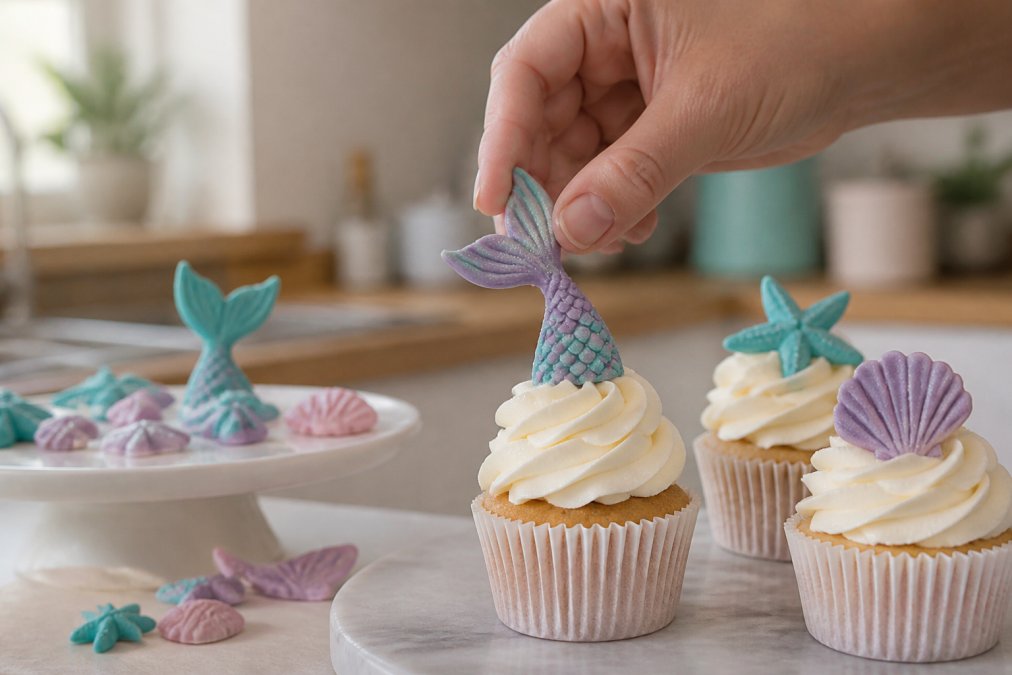
Since 2013, we have dedicated ourselves to creating decorations that are truly inclusive. Every single one of our handmade sugar toppers is 100% vegan, vegetarian, and free from dairy and gluten, making them a worry-free choice for those with coeliac disease and other dietary requirements. Our range includes everything from mermaid tail cake toppers for themed birthday parties to adorable Easter bunnies, ensuring there is a design for every celebration.

Our commitment to safety is not just a marketing claim; it is the foundation of our business. This dedication has been recognised within the industry, as we are proud winners of the Bronze Award in the Free From Food Awards 2025, the Gold award in the Halloween section, and the Scotland's Prestige Awards 2025/2026 title for Cake Decorating Service of The Year. These accolades reflect our promise to deliver safe, beautiful, and delicious decorations.
We understand that trust is paramount, which is why we craft every topper in a controlled environment free from gluten and dairy. This gives you the confidence to order in advance for a special occasion, knowing your decorations will arrive safe, intact, and ready to make your cake the centrepiece of the party. For a personal touch, our decorations can be custom made to match your theme or colour scheme.
Conclusion: Decorate With Confidence
Celebrating with a beautifully decorated cake should not be a source of stress for those managing coeliac disease. By understanding the risks of cross-contamination and asking the right questions, you can confidently choose safe and stunning handmade sugar toppers for celiacs. Whether you opt for DIY or the guaranteed safety of a specialist provider, the key is vigilance.
At Simply Toppers, our mission is to make every bake special and inclusive for all. Our range of award-winning, handmade decorations is designed to bring joy without compromise, offering complete peace of mind for parents and bakers alike. Explore our collection and find the perfect finishing touch for your next celebration.
Frequently Asked Questions
Are all sugar paste cake decorations gluten-free?
No, not all sugar paste decorations are gluten-free. While the base ingredients of sugar, glucose, and water are naturally gluten-free, cross-contamination can occur during manufacturing. Some decorations may also contain additives or be produced in facilities that handle wheat. Always look for products that are explicitly labelled gluten-free and made in a controlled environment. For handmade sugar toppers, ask the maker about their ingredient sourcing and production process to be certain.
How can I verify if handmade sugar toppers are safe for celiacs?
Ask the maker directly about their cross-contamination protocols. Enquire whether they use a dedicated gluten-free workspace and tools, and whether their ingredients, such as sugar paste and food colouring, are certified gluten-free. Trustworthy sellers will be transparent about their processes. Simply Toppers, for example, makes all its toppers in a controlled environment using gluten-free sugar paste.
What is the difference between gluten-free and wheat-free cake toppers?
Wheat-free means the product does not contain wheat, but it might still contain other gluten sources like barley or rye. Gluten-free is a stricter standard, meaning the product contains no gluten from any source and is safe for people with coeliac disease. Always choose decorations labelled gluten-free, not just wheat-free. This distinction is important for handmade sugar toppers, where you need to verify the entire ingredient list and production process.
How do I store handmade sugar toppers to prevent cross-contamination?
Store your handmade sugar toppers in their original sealed packaging in a cool, dry place away from strong odours. Keep them separate from regular flour and baking ingredients, which can easily become airborne and contaminate your decorations. Once the package is opened, use the toppers promptly. If you have leftovers, wrap them tightly in food-safe paper or a clean container. Always wash your hands and surfaces thoroughly before handling the toppers if you have been baking with gluten.