

How Long Do Cake Toppers Last: Storage Guide
Editorial TeamTable of Contents
- How Long Do Cake Toppers Last: The Basics
- Do Edible Toppers Melt Fast in Warm Conditions?
- How to Store Fondant Toppers for Maximum Freshness
- How Far in Advance Can You Make Fondant Decorations?
- Storage Conditions That Protect Your Toppers
- Signs Your Cake Toppers Have Spoiled
- Storing Toppers on Finished Cakes
- Conclusion
- Frequently Asked Questions
How Long Do Cake Toppers Last: The Basics
The shelf life of edible cake toppers depends entirely on what they're made from and how you store them. Fondant decorations, gum paste toppers, and modelling paste each have different longevity timescales. Understanding these differences is crucial when planning ahead for a special celebration, especially with handmade, custom designs.
Most edible toppers last anywhere from a few days to several months when stored correctly. The real question isn't just "how long do cake toppers last" in theory, but how to preserve them so they're ready exactly when you need them. At Simply Toppers, we've designed our handmade sugar paste decorations to maintain their quality through proper storage.
The key variables are moisture, temperature, and the topper material itself. A fondant decoration stored in a cool, dry place will outlast one left exposed to humidity. Gum paste toppers tend to harden over time, which helps long-term storage but can challenge last-minute adjustments.
Shelf life by topper type
Fondant toppers typically last 2-4 weeks at room temperature when stored properly in an airtight container. Fondant is sugar-based and absorbs moisture readily, so longevity hinges on keeping it sealed away from humidity. Refrigerated fondant can last up to 2 months, though condensation becomes a concern when you remove it.
Gum paste decorations are more durable than fondant because they dry out faster and harder. A gum paste topper can last 1-3 months at room temperature in an airtight container, and even longer if refrigerated. The downside is that gum paste becomes brittle over time, so handle it carefully.
Royal icing toppers are surprisingly hardy. When kept in an airtight container away from moisture, royal icing can last 2-3 months or longer. The main enemy is humidity, which softens the icing and compromises its structure.
Modelling paste sits between fondant and gum paste in durability. Expect 2-8 weeks depending on storage conditions. It's more forgiving than gum paste but less moisture-resistant than royal icing.
Do Edible Toppers Melt Fast in Warm Conditions?
Yes, edible toppers can soften significantly in warm conditions, and this is one of the most common mistakes people make when displaying cakes at parties. Fondant begins to soften around 24-27°C, and by 30°C, it's noticeably compromised (peer-reviewed research). Gum paste holds up slightly better but still deteriorates in prolonged heat.
What happens is that sugar-based decorations absorb moisture from warm air, becoming sticky and losing their shape. A fondant topper that looks pristine in your kitchen might look droopy after sitting in a warm marquee for a few hours.
If your celebration is outdoors on a warm day or in a heated venue, keep your cake in the coolest spot available until the last moment. Consider a shaded table rather than direct sunlight, and avoid positioning the cake near heaters, radiators, or kitchen appliances. Some bakers use a cool box with a frozen gel pack placed beneath (not touching) the cake base to maintain temperature.
For summer events or warm climates, prefer royal icing toppers over fondant, as they're slightly more heat-resistant. Alternatively, apply your toppers as late as possible, just before serving.
How to Store Fondant Toppers for Maximum Freshness
Fondant is the most popular choice for handmade cake toppers, and storing it properly is straightforward once you understand the core principles.
Room temperature storage
At room temperature (around 18-21°C), fondant toppers stay fresh for 2-4 weeks in the right conditions. The critical factor is an airtight container. Plastic containers with tight-sealing lids work perfectly, as do glass containers, which allow you to see inside without opening them repeatedly.
Place your toppers inside the container and ensure the lid closes completely. You can add a small packet of silica gel or food-grade desiccant to absorb stray moisture, though this isn't essential if your kitchen is naturally dry. Never store fondant toppers in paper bags or cloth wraps, as these allow air circulation, leading to dehydration and cracking.
Keep the container away from direct sunlight, as UV exposure can fade colours and degrade the sugar structure. A kitchen cupboard or pantry is ideal. Avoid storing near windows or in rooms with temperature fluctuations.
Refrigeration and airtight containers
Refrigeration extends fondant topper shelf life to 6-8 weeks. However, condensation is the trade-off. When you remove a cold container from the fridge, moisture beads on the surface, and this condensation is the enemy of fondant.
To refrigerate safely, place your toppers in an airtight container, then wrap the entire container in cling film before placing it in the fridge. This extra layer prevents condensation from forming on the fondant itself. When ready to use the toppers, leave the sealed container at room temperature for 30-60 minutes before opening it. This allows the temperature to equalise and minimises condensation.
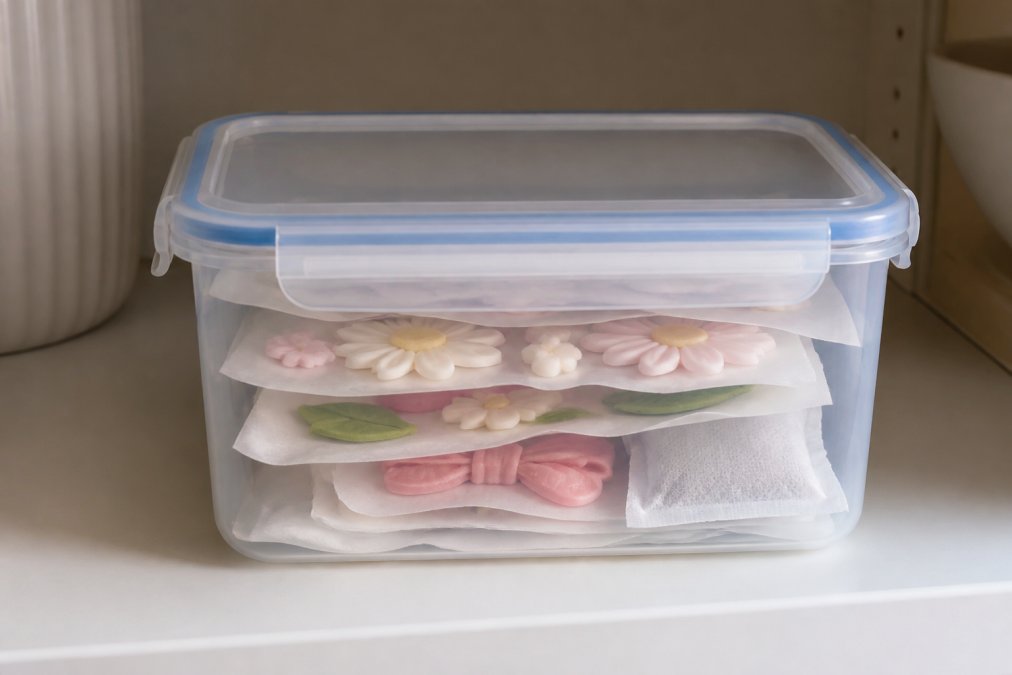
Never place fondant toppers directly in the fridge without a protective container; the cold air will dry them out and cause cracking. An airtight container is non-negotiable for refrigerated storage.
How Far in Advance Can You Make Fondant Decorations?
You can make fondant toppers anywhere from 2-8 weeks before you need them, depending on your storage method and design complexity.
For simple fondant shapes, circles, stars, basic flowers, making them 4 weeks in advance is safe. More intricate designs with fine details benefit from being made closer to the event (1-2 weeks prior) because delicate elements are more prone to breakage during storage and handling.
The advantage of making toppers well in advance is that you spread your workload. Instead of rushing the night before a party, you can craft them over several weeks, test your designs, and store them ready to go.
If you're ordering custom handmade toppers from Simply Toppers, we can create them weeks ahead and ensure they arrive in perfect condition, allowing you to focus on other aspects of your celebration. Our handmade sugar paste decorations are designed to travel and store well.
The practical limit is around 8 weeks. Beyond that, even in ideal storage conditions, fondant begins to develop a slightly stale taste and texture as the sugar can crystallise slightly. For best results, aim for 2-6 weeks in advance.
Storage Conditions That Protect Your Toppers
Creating the right environment is everything. Think of it as climate control for your decorations.
Temperature and humidity impact
Fondant and gum paste are hygroscopic, meaning they absorb moisture from the air. In a humid environment (above 60% relative humidity), they soften and become sticky. In very dry conditions (below 30% humidity), they crack and become brittle. The sweet spot is 40-50% humidity at a temperature between 18-21°C.
If you live in a particularly damp climate, coastal areas or regions with high rainfall, consider using a small dehumidifier in the room where you store your toppers. In very dry climates, you might need to add a small container of water near (but not touching) your storage container to maintain adequate moisture.
Temperature stability matters more than the exact temperature itself. Fluctuating conditions stress the topper structure. A kitchen that stays consistently cool is better than one that swings from cold to warm throughout the day.
Avoiding moisture absorption and condensation
Moisture is the primary threat to topper longevity. When air carries moisture, fondant absorbs it and becomes soft and sticky, ruining the shape and making the topper difficult to place on a cake.
Never store toppers in the kitchen whilst you're cooking or baking; steam from boiling water or a hot oven will travel through the air and penetrate even sealed containers if they're too close. Keep your storage container at least a metre away from the cooker.
Condensation is a specific problem when moving toppers between temperature zones. If you store toppers in a cool room and then bring them into a warm kitchen, condensation forms on the surface. The solution is simple: leave sealed containers at room temperature for 30-60 minutes before opening them, allowing the internal temperature to match the external environment.
Signs Your Cake Toppers Have Spoiled
Knowing when a topper has passed its prime prevents disappointment on the day.
Stickiness or tackiness is the first sign that fondant has absorbed too much moisture. If your topper feels sticky to the touch, it's begun to break down. You can sometimes salvage it by dusting it lightly with icing sugar, but ideally, you'd replace it.
Cracks or brittleness indicate dehydration. Gum paste and fondant stored in very dry conditions become fragile and snap easily. These toppers are still technically edible, but they look poor and are difficult to handle.
Discolouration or dullness suggests the topper has been exposed to light or air for too long. Colours fade, and the surface loses its shine. This signals that storage conditions weren't ideal.
Mould or unusual spots mean the topper has been exposed to moisture and warmth. Discard these immediately. Mould on edible decorations is a food safety issue, especially for guests with allergies or compromised immune systems.
Hard, crystallised texture in fondant means the sugar has begun to crystallise internally. The topper still tastes fine but has an unpleasant grainy mouthfeel. This typically happens after 8+ weeks of storage.
Separation or crumbling in gum paste indicates it's become too dry. If the topper crumbles when you touch it, it's past its usable lifespan.
Storing Toppers on Finished Cakes
Once a topper is placed on a finished cake, the rules change slightly. If your cake is at room temperature and will be served within 4 hours, your topper should remain stable. Fondant and gum paste don't deteriorate rapidly on a cake in that timeframe. The cake itself provides a protective microclimate around the topper.
For longer storage, 8+ hours before serving, refrigerate the entire cake with the topper in place. Wrap the cake loosely in cling film (not touching the topper itself) and place it in the fridge. The topper will harden slightly in the cold, which actually helps it maintain its shape. Before serving, remove the cake from the fridge 30-60 minutes beforehand so it reaches room temperature gradually.
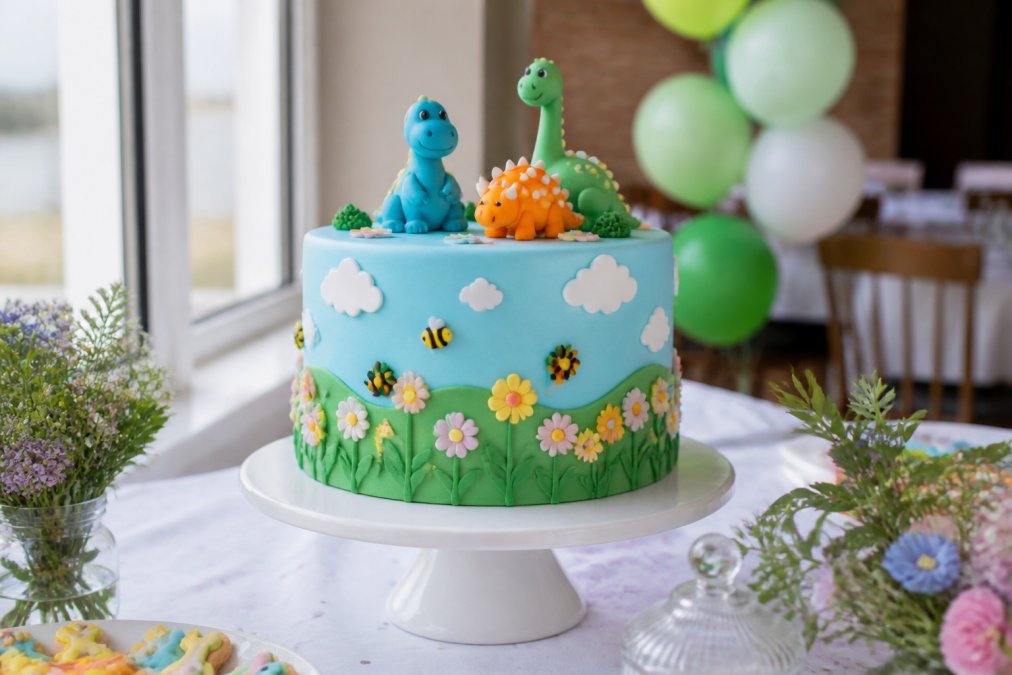
Never place a warm cake with a fresh topper directly into the fridge; the temperature shock can cause condensation on the topper and cake base. Let both cool to room temperature first.
If you're transporting a cake with toppers to a venue, keep it in the coolest part of your car. Avoid placing it in direct sunlight or near heat vents. Once you arrive, position the cake in the coolest spot available at the venue, away from heaters, sunlight, and kitchen appliances.
Conclusion
How long cake toppers last comes down to storage, temperature, and understanding your material. Fondant typically lasts 2-4 weeks at room temperature, gum paste 1-3 months, and royal icing 2-3 months or longer. The key is keeping them in an airtight container, away from moisture and temperature extremes.
When you're planning a celebration and want toppers that arrive in perfect condition and stay fresh until you need them, Simply Toppers creates handmade sugar paste decorations designed for reliability. Our award-winning toppers are 100% vegan, dairy-free, and gluten-free, making them inclusive for all your guests. Whether you're ordering weeks in advance or need something closer to the date, we ensure your decorations are ready when you are.
Frequently Asked Questions
How far in advance can I make fondant cake toppers?
Fondant toppers can be made 4-6 weeks ahead when stored correctly in an airtight container in a cool, dry place. Gum paste decorations last slightly longer, up to 8 weeks. Store them away from direct sunlight and humidity to prevent softening or hardening. For best results, keep them at room temperature rather than refrigerating unless your environment is particularly warm or humid.
Do edible toppers melt fast if left out at room temperature?
Edible toppers are generally stable at room temperature for several hours, but they can soften or lose definition in warm conditions above 20°C or in high humidity. Fondant is more susceptible to melting than gum paste. Keep toppers away from direct sunlight, heat sources, and steam. If your celebration is outdoors or in a warm venue, apply toppers closer to serving time and avoid placing them near radiators or warm lighting.
What is the best way to store edible cake toppers before using them?
Store edible toppers in an airtight container at room temperature in a cool, dry place away from direct sunlight. Avoid the refrigerator unless your kitchen is very warm, as temperature fluctuations can cause moisture to accumulate on the toppers.
Can I store fondant toppers in the fridge, and will it affect their quality?
You can refrigerate fondant toppers, but it's not ideal unless your home is very warm or humid. Refrigeration risks condensation forming on the toppers when they're removed, which can cause stickiness or colour bleeding on edible images. If you must refrigerate, store them in an airtight container and allow them to reach room temperature before opening the container. Room temperature storage in an airtight box is usually the better choice for maintaining texture and appearance.
This article was written using GrandRanker