

Edible Glitter Safe for Gluten Free Diets: A 2026 Guide
Editorial TeamLast Updated: 23 October 2026
Quick Summary
Edible glitter safe for gluten free diets must have every ingredient free from wheat, barley and rye, and be made and packed without those grains nearby. A gluten free badge alone is not enough, so always check the full ingredient list, allergen statement and may contain line.
- Check that the full ingredient list names every starch source, as wheat starch sometimes appears in additives and thickeners.
- Avoid products with unspecified starch, barley malt extract or shared equipment warnings mentioning wheat.
- Store glitter in sealed tubs with a dedicated dry spoon, away from flour bins, to prevent cross-contamination.
- Non-toxic craft glitter is only safe to touch, not to swallow, so keep it off the cake.
- If a supplier cannot confirm gluten free status and shared equipment details, walk away and choose another option.
Table of Contents
- Why Edible Glitter and Gluten Free Diets Need Careful Checking
- What Makes Gluten Free Edible Glitter Safe to Eat
- Edible Glitter Ingredients to Check Before You Buy
- Gluten Cross-Contamination in Baking Decorations
- Edible Glitter vs Non-Toxic Glitter: What's the Difference?
- How to Identify Truly Gluten Free Edible Glitter
- Choosing Glittered Cake Toppers for Allergen-Friendly Celebrations
- Conclusion
- Frequently Asked Questions
Why Edible Glitter and Gluten Free Diets Need Careful Checking
If you are baking for someone with coeliac disease, edible glitter safe for gluten free diets is not a detail you can skip. At Simply Toppers, we have made vegan, dairy-free and gluten-free sugar paste decorations since 2013, so we know how easily a sparkly finish can go wrong. Glitter is tiny, it goes everywhere, and it is often made in kitchens that handle wheat too.
That is why the label matters more than the shimmer. A pot marked "gluten free" tells you about the ingredients, not the production line. Below, we explain what makes a glitter genuinely safe, which ingredients to check, and how to spot cross-contamination risks before they reach the cake.
What Makes Gluten Free Edible Glitter Safe to Eat
Gluten free edible glitter is safe when every ingredient is naturally free from wheat, barley and rye, and the product is made and packed without those grains nearby. Safety comes from two things working together: a clean recipe and a clean production space. Maintaining this level of rigorous cross-contamination control remains essential when coordinating the broader logistics of gluten-free menu planning for large-scale celebrations.
Base Ingredients That Keep Glitter Gluten Free
Most edible glitter is built on a simple base. Common ones include:
- Sugar or glucose syrup for the sparkle and sweetness
- Modified starch as a carrier, usually from maize or potato
- Mica or titanium dioxide for the shimmer
- Food colourings in liquid or powder form
None of these contain gluten on their own. The risk sits in additives and thickeners, where wheat starch sometimes appears.
Why Coeliac Safety Goes Beyond the Word Gluten Free
For someone with coeliac disease, even tiny traces can trigger symptoms (the NHS). That means the word "gluten free" on a pack is a starting point, not the finish line. You also want to know how the glitter was stored, scooped and packed.
If a supplier handles flour in the same room, dust can settle in open tubs. For coeliac readers, that is the difference between a safe cake and a ruined celebration.
Edible Glitter Ingredients to Check Before You Buy
Check the full ingredient list, not just the headline claim. Look for a named starch source, a clear allergen statement, and a "may contain" line. If any of those are missing, ask the supplier directly before you buy.
Ingredients to Look Out For or Avoid
Some ingredients deserve a second look:
- Wheat starch, even in small amounts, unless the pack confirms it is gluten free
- Unspecified "starch" with no source named
- Barley malt extract, often used for flavour
- Shared equipment warnings such as "made in a factory that handles wheat"
A common mistake is trusting a pretty label over the small print. If you want a deeper guide to spotting hidden allergens in decorations before purchasing, read how to identify hidden allergens in decorations. Turn the tub over and read the back first.
Gluten Cross-Contamination in Baking Decorations
Cross-contamination is the biggest hidden risk with glitter. It happens when gluten traces move from flour, tools or hands onto a decoration that was otherwise safe. A shared sieve, a dusty shelf or a reused scoop can all do it.
Keep your decorations in sealed tubs, use a dedicated dry spoon, and store glitter away from flour bins. For a full walkthrough of keeping your bakes and decorations free from gluten traces, see how to ensure cross contamination free baking. If you are baking both gluten-free and standard cakes on the same day, decorate the gluten-free one first.
Glitter Sea Life Cake Decorations for Festive Cupcake and Cake Accents →
Edible Glitter vs Non-Toxic Glitter: What's the Difference?
Edible glitter and non-toxic glitter are not the same thing, and the gap matters. Edible glitter is made from food-grade ingredients and is meant to be eaten. Non-toxic glitter is only safe to touch, not to swallow.
Craft glitter often contains plastic or metal film. It can look identical on a cake but belongs nowhere near a plate. If a product says "non-toxic" but not "edible", keep it off the cake.
| Type | Safe to eat? | Typical base | Use on food? |
|---|---|---|---|
| Edible glitter | Yes | Sugar, starch, mica | Yes |
| Non-toxic craft glitter | No | Plastic or metal film | No |
| Sugar paste toppers | Yes | Sugar paste, food colour | Yes |
The table makes it simple: if it does not say edible, it does not go on the bake.
How to Identify Truly Gluten Free Edible Glitter
To identify gluten free edible glitter, follow a short checklist before anything touches the cake:
- The pack states "gluten free" clearly
- The full ingredient list names every starch source
- An allergen statement lists wheat, barley and rye
- A "may contain" line is present or confirmed absent
- The supplier answers questions about shared equipment
- The tub is sealed and stored away from flour
If a supplier cannot confirm these points, walk away. There is always another option.
Choosing Glittered Cake Toppers for Allergen-Friendly Celebrations
Choosing glittered toppers for an allergen-friendly party comes down to trust. If you are ready to buy, our best allergen friendly cake topper brands guide rounds up trusted options to choose from. You want a decoration that is genuinely edible, free from dairy and gluten, and made by someone who understands the risk. Handmade sugar paste toppers are a strong choice because the ingredients are simple and the finish is easy to check. You can also explore handmade sugar toppers for coeliacs that are confirmed safe and vegan.
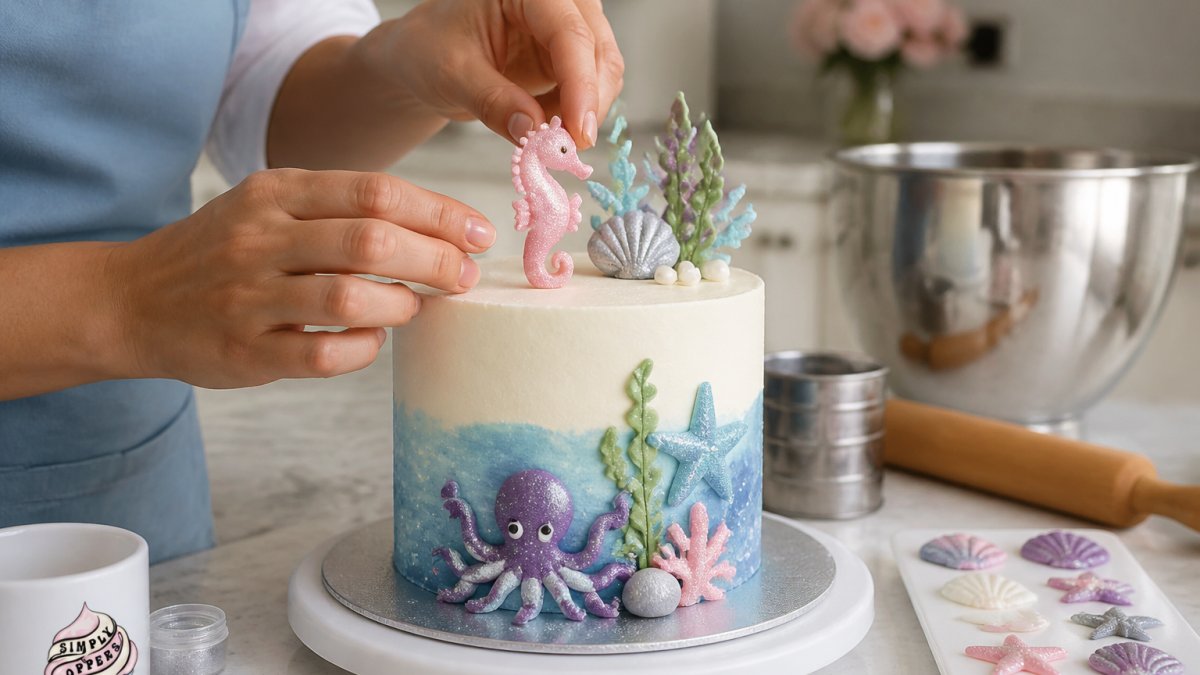
At Simply Toppers, every decoration is handmade from our vegan, vegetarian, gluten-free and dairy-free sugar paste. Our glitter sea life cake decorations come in packs of 16 and suit ocean-themed parties. For a bigger set, the glittered marine life decorations add dolphins and other creatures to cupcakes and cakes.


Conclusion
Getting glitter right for a gluten free guest takes a little care, but it is not hard. Read the back of the pack, check the starch source, and keep your decorations away from flour. For broader vegan and gluten free baking tips to apply next, see our allergy friendly baking tips. Then you can decorate with confidence.
If you would rather skip the guesswork, Simply Toppers makes handmade edible decorations that are vegan, dairy-free and gluten-free, with over a decade of experience behind every design. Our award-winning toppers are made to be inclusive, so everyone at the party can enjoy the cake. Get started with Simply Toppers and finish your bake with a sparkle that is safe for every guest.
Frequently Asked Questions
Is edible glitter gluten-free?
Not always. Edible glitter can be gluten free, but it depends entirely on the ingredients and how it was made. Some glitters use wheat-derived carriers, starches or anti-caking agents that contain gluten, and shared production lines can introduce cross-contamination. Always check the label for a clear gluten free statement and look for brands that also declare their allergen controls. If a product does not list its allergens, treat it as unsuitable for a gluten free diet until the maker confirms in writing.
How can I tell whether edible glitter is safe for a gluten-free diet?
Start with the packaging: look for a plain gluten free claim, a full ingredient list and any 'may contain' warnings. Check the manufacturer's allergen policy, especially if the glitter is made in a bakery that also handles wheat. For coeliac safety, contact the maker and ask whether the product is tested and whether it is made on a dedicated line. A short email reply confirming gluten free status and cross-contamination controls is worth more than a vague label.
Can edible glitter be cross-contaminated with gluten?
Yes. Cross-contamination in baking decorations is a real risk when glitter is packed, stored or made in a kitchen that also handles flour, wheat starch or cereal products. Dust from wheat flour settles easily, and shared scoops or tubs can transfer traces. If you are baking for someone with coeliac disease, buy from suppliers who make gluten free decorations in a controlled environment, keep tubs sealed, and never dip a wet cake knife back into a glitter pot.
What is the difference between edible and non-toxic glitter?
Edible glitter is made from food-safe ingredients and is intended to be eaten. Non-toxic glitter is only safe to touch or use on craft items, not to swallow, and it may contain plastic, metal or craft dyes. Never put non-toxic glitter on a cake, even for decoration, because guests can ingest it. For gluten free bakes, choose edible glitter or handmade sugar paste toppers with a clear ingredient list, such as Simply Toppers' gluten free glittered sea life decorations.
