

New to Gluten-Free Baking? Your First Steps
Editorial TeamLast Updated: October 26, 2026
Quick Summary
Successful gluten-free baking starts with a pre-mixed flour blend rather than a single flour, plus a binder such as xanthan gum or psyllium husk to hold the crumb together. Gluten-free flours absorb more liquid, so expect recipes to need extra water or milk, and always weigh your flour rather than scooping it.
- Use around half a teaspoon of xanthan gum per 100g of flour as a starting point.
- Weigh your flour instead of scooping it to avoid dry, dense bakes.
- Start testing gluten-free cakes five minutes early to prevent overbaking.
- Let cakes cool fully in the tin before cutting to stop them pulling apart.
- Keep a separate set of bowls, spoons and a sieve for gluten-free bakes.
Table of Contents
- Before You Start: What Every Beginner Baker Needs
- Choosing the Right Gluten-Free Flour for Baking
- Gluten-Free Baking Substitutes That Actually Work
- Why Is My Gluten-Free Cake Crumbly?
- Avoiding Cross-Contamination in Gluten-Free Baking
- Common Beginner Mistakes and How to Fix Them
- Finishing Your Bake: Toppers Everyone Can Eat
- Frequently Asked Questions
Before You Start: What Every Beginner Baker Needs
Gluten-free baking is the practice of making cakes, breads and biscuits without wheat, barley or rye, using flours and binders that behave very differently from standard plain flour. It is not simply a swap. This guide covers the foundations of gluten-free baking.
The good news: once you understand three things, the rest falls into place.
- Blends beat single flours. A mix of rice, potato and tapioca flours mimics wheat far better than any one flour alone.
- Binders do the glue work. Xanthan gum or psyllium husk holds the crumb together when gluten is absent.
- Hydration runs higher. Gluten-free flours absorb more liquid, so recipes often need extra water or milk.
Before you begin, stock your kitchen with a set of kitchen scales, a set of measuring spoons, baking parchment and two mixing bowls. Weighing rather than scooping matters more here than in regular baking, because small flour errors show up fast.
For a broader look at vegan and gluten-free basics, our allergy friendly baking tips: vegan & gluten free guide is a good next read.
Choosing the Right Gluten-Free Flour for Baking
Gluten-free flour for baking falls into two camps: single flours and pre-mixed blends. Blends are the easier starting point for beginners because the ratio work is already done.
Here is how the common options compare:
| Flour type | Best for | Watch out for |
|---|---|---|
| Rice flour blend | Sponges, muffins | Can taste gritty if under-mixed |
| Almond flour | Rich cakes, brownies | Heavy texture, needs more egg |
| Coconut flour | Dense bakes | Absorbs huge amounts of liquid |
| Buckwheat flour | Breads, pancakes | Strong, earthy flavour |
| Pre-mixed blend | All-round baking | Check it states gluten-free |
A common mistake is buying one single flour and expecting cake-level results. It rarely works. Start with a labelled blend, then experiment once you know how your oven behaves.
What most guides miss is that flour blends vary between brands. If a recipe was written for one blend, a different one may need more or less liquid. Stick to one blend until you are confident.
Gluten-Free Baking Substitutes That Actually Work
Gluten-free baking substitutes replace the jobs gluten used to do: binding, structure and stretch. Get those three covered and your bakes hold together.
- Xanthan gum: the most reliable binder. Around half a teaspoon per 100g of flour is a sensible starting point.
- Psyllium husk: good for breads, adds a wheat-like chew.
- Ground flaxseed: mix with water for a vegan egg replacement.
- Cornflour: lightens blends and softens the crumb.
- Extra egg: improves structure but adds richness.
A useful rule: if your bake crumbles, add binder. If it is rubbery, you have used too much. Adjust one variable at a time so you know what changed.
Keep a small notebook. Write down what you used and how it turned out. Two or three bakes in, your own notes beat any recipe online.
Why Is My Gluten-Free Cake Crumbly?
A gluten-free cake turns crumbly when it lacks binder, is overbaked, or was cut too soon. Those three causes explain most dry, falling-apart sponges.
Work through them in order:
- Check your binder. No xanthan gum or psyllium means nothing holds the crumb.
- Check your timings. Gluten-free cakes go from done to dry quickly. Start testing five minutes early.
- Check your cooling. Cutting a warm cake pulls it apart. Let it cool fully in the tin.
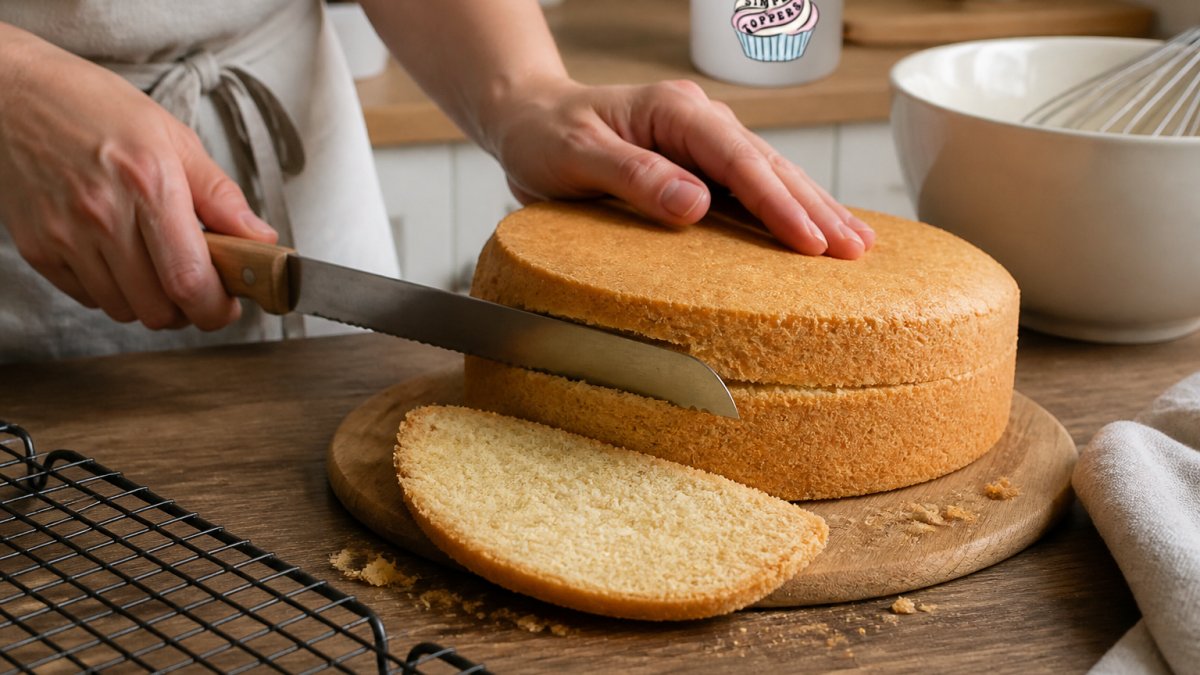
Another culprit is the flour itself. Some blends are coarser than others, and coarse flour gives a loose crumb. Sifting helps a little, but switching blends helps more.
The fix is rarely dramatic. Add a quarter teaspoon more binder, pull the cake out earlier, and give it twenty minutes to cool. That trio solves most crumbly cakes.
Avoiding Cross-Contamination in Gluten-Free Baking
Cross-contamination in gluten-free baking happens when tiny traces of wheat reach your ingredients or tools. For anyone baking for a coeliac guest, this is the step that matters most.
Simple habits that work:
- Keep a separate set of bowls, spoons and a sieve for gluten-free bakes.
- Store gluten-free flours in sealed containers, away from standard flour.
- Wipe the worktop and clean the mixer before you start.
- Never use the same tub of butter or jam after a knife has touched bread.
- Check every label, including baking powder and icing sugar.
Watch out: wooden spoons and boards hold traces in their grain. Use plastic or metal for gluten-free work, or keep a dedicated set.
If you are baking for someone with a serious allergy, our guide on how to ensure cross contamination free baking walks through the full routine in more detail.
Common Beginner Mistakes and How to Fix Them
The mistakes beginners make are predictable, which is good news. Each one has a straightforward fix.
| Mistake | What happens | The fix |
|---|---|---|
| Scooping flour from the bag | Dry, dense bake | Weigh your flour |
| Skipping the binder | Crumbly cake | Add xanthan gum or psyllium |
| Opening the oven early | Cake sinks | Keep the door shut until testing time |
| Using cold eggs | Curdled batter | Bring eggs to room temperature |
| Overmixing | Tough, gummy texture | Mix until just combined |
One more: expecting gluten-free batter to look like regular batter. It is often thicker and stickier. Trust the recipe, not your instincts from wheat baking.
In practice, the beginners who improve fastest are the ones who change one thing at a time. Bake the same recipe three times with small tweaks, and you will learn more than from ten different recipes. Mastering the behaviour of these individual components provides a solid foundation for cooking with alternative grains, which often require similar patience and methodical testing to yield consistent results.
Finishing Your Bake: Toppers Everyone Can Eat
Decorating is where allergen-friendly baking gets tricky, because many sprinkles, glitters and sugar shapes contain wheat or dairy. The safest approach is to buy decorations that state they are gluten-free and vegan on the pack.
At Simply Toppers, we make handmade sugar paste decorations that are 100% vegan and free from dairy and gluten. They are fully edible, so there is nothing to pick off before serving. Since 2013 we have supplied them for birthdays, baby showers and seasonal celebrations, and our range has won awards including Gold in the Free From Food Awards 2025.
A few practical pointers:
- Add toppers close to serving so they keep their shape.
- Store them flat, in a cool dry place, away from direct sun.
- Keep the packaging until the cake is served, in case a guest asks about ingredients.
For more decoration ideas, see our picks for safe allergen free cake decorations, our guide to edible glitter safe for gluten free diets, and our full guide to vegan gluten free cake decorations.
Frequently Asked Questions
What is the best way to start gluten-free baking?
Start with a gluten-free flour blend rather than a single flour, because blends already combine the starches and proteins that plain flour provides. Choose one reliable recipe, weigh your ingredients on scales rather than using cups, and bake it once before changing anything. Keep a note of what you used and how it turned out.
Can I replace plain flour with gluten-free flour in any recipe?
Not directly, and this is the mistake that trips up most beginners. Gluten-free flour for baking behaves differently from wheat flour: it absorbs more liquid and needs a binder such as xanthan gum to hold structure. For simple traybakes you can often swap in a blend at the same weight, but for cakes and breads look for a recipe written gluten-free from the start. If you must adapt, add a binder and expect to adjust the liquid.
Why do gluten-free cakes turn out dry or crumbly?
Gluten-free bakes usually crumble because there is no gluten network to trap moisture and hold the crumb together. The fix is a combination of a binder like xanthan gum, a little extra liquid or fat, and resting the batter for 20 to 30 minutes before baking so the flours fully hydrate. Baking for even a few minutes too long also dries them out, so check earlier than the recipe suggests and take the tin out as soon as a skewer comes out clean.
How do I avoid cross-contamination when baking gluten-free?
Keep a separate set of tools where you can: a sieve, measuring spoons, a rolling pin and a baking tin used only for gluten-free bakes. Wash hands and surfaces before you start, and never dip a knife back into a jam jar after spreading it on wheat bread. Check that your baking powder, icing sugar and decorations are labelled gluten-free, since these are common hidden sources. If you bake for someone with coeliac disease, treat every crumb as a risk.
Your first gluten-free bake will not be perfect, and that is fine. The bakers who get good fast are the ones who keep it simple, weigh their ingredients and learn from each attempt. If you want the finishing touch sorted, browse our handmade, allergen-friendly toppers and get your cake celebration-ready with decorations everyone at the table can enjoy.
